Slate Team

The world of social media is an absolute game-changer that's in a constant state of dynamic transformation, with groundbreaking platforms, innovative features, and revolutionary audience behaviors emerging every single year. For social media marketers, keeping up with the latest social media trends isn't just a matter of curiosity—it's absolutely essential for achieving measurable growth and building invaluable long-term brand loyalty. In 2026, the landscape is more dynamic than ever before, with short form video, user generated content, and cutting-edge ai tools completely reshaping how brands connect with their audiences in the most impactful ways imaginable.
Small business owners and marketing professionals who remain competitive are those savvy innovators who embrace these media trends with enthusiasm, strategically adapting their content creation strategies to meet evolving expectations like true industry leaders. Whether it's leveraging the viral power of short form video, tapping into the authentic magic of user generated content, or using ai tools to streamline workflows and dramatically boost engagement, the opportunities are absolutely vast for those willing to innovate and push boundaries. That's exactly what separates successful brands from the rest—their willingness to embrace change and maximize every opportunity.
This article explores the standout trends that will define social media in 2026, offering invaluable practical insights for building a social media strategy that not only keeps pace with change but also drives real, measurable business results that matter. From the exciting rise of interactive video to the growing importance of community building and the seamless integration of AI, understanding these shifts is the essential first step toward creating content that truly resonates and delivers exceptional impact. It's no wonder that forward-thinking marketers are already preparing for these revolutionary changes that will elevate their brands to new heights.
Key Takeaways
Short-form and interactive video on TikTok, Instagram Reels, YouTube Shorts, and emerging formats will still dominate attention in 2026, but brands will win by creating series and “shows,” not just one-off clips.
AI-generated content, AI agents, and automation will be mainstream across social, yet brands that clearly disclose AI use and keep humans in charge of storytelling will hold audience trust.
Private communities, DMs, and niche channels (Discord, Reddit, Slack, broadcast channels) will matter more than public follower counts as people seek smaller, safer spaces.
Social search and “social SEO” on TikTok, Instagram, YouTube, and Pinterest will rival traditional Google search, making searchable captions, hooks, and local keywords critical.
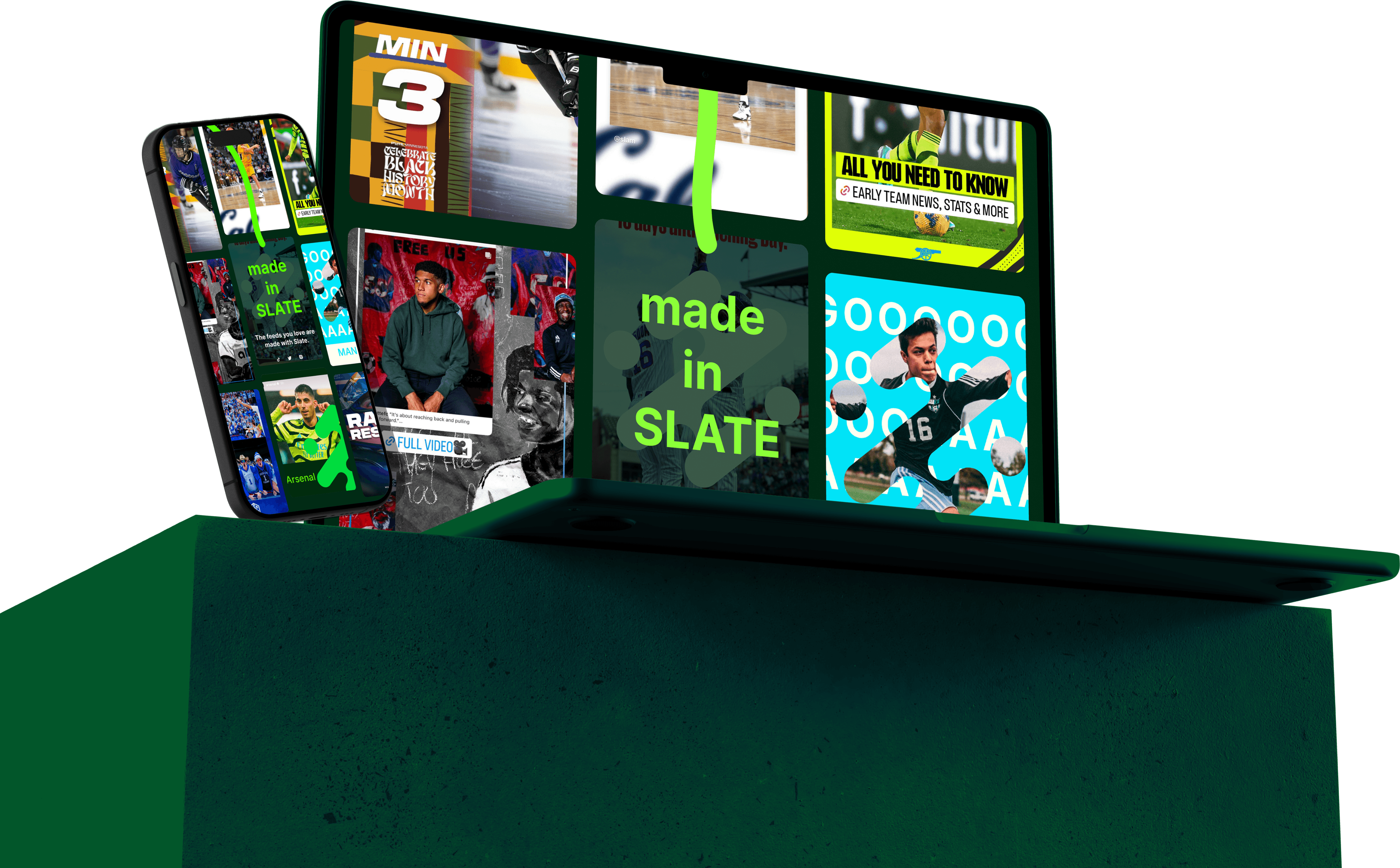
Slate (www.slateteams.com) will be positioned as the tool that helps brands respond to these shifts quickly—by enabling fast, on-brand video, UGC-style content, and collaborative workflows without sacrificing brand consistency.
Why social media trends matter for your 2026 strategy
The latest social media trends aren’t just conversation starters for marketing podcasts—they directly influence revenue, community growth, brand trust, and even who you hire for your social team. Getting these trends right means the difference between building genuine audience engagement and shouting into an algorithm that’s already moved on.
Consider where we are right now:
An estimated 5.44 billion people use social media worldwide, representing 65.7% of the global population
The average user actively engages with 6.84 social platforms monthly
Brands are advised to post between 48 and 72 times per week across platforms just to maintain visibility
Gen Z spends roughly 50 extra minutes daily on social and user generated content compared to traditional TV and movies
These numbers tell a clear story: social media platforms aren’t just part of your marketing strategy—they’re often the center of it. Social media content is now a vital part of content strategies, driving engagement through behind-the-scenes sharing, adapting to trends, and leveraging AI-driven creation. Social content often satisfies search engines' E-E-A-T criteria through high levels of virality and engagement, which boosts brand visibility. And here’s the challenge: trends now evolve faster than annual planning cycles. The format that worked in January might feel stale by March. The platform that drove your best results last quarter might push a major algorithm update next week.
This is exactly why social marketers need flexible strategies they can update monthly or even weekly. Tools like Slate help brands keep pace with emerging trends by streamlining on-brand content creation—especially video content and UGC-style assets—across teams, markets, and platforms. When you can move fast without sacrificing quality, you can actually capitalize on what’s working instead of just reading about it.
Short-form and interactive video: Still the engine of attention
Short form video continues to dominate every platform’s engagement metrics, and that’s not changing in 2026. But the game is evolving. Random one-off clips are table stakes now—the brands seeing real results are building recurring formats and episodic series that keep audiences coming back.
The numbers back this up:
TikTok creators with under 100k followers achieve 7.5% engagement rates—far surpassing Instagram’s 3.65%
Carousel posts on Instagram pull 1.92% engagement
On LinkedIn, multi-image posts hit 6.6% engagement while video content reaches 5.6%
Document posts on LinkedIn deliver 5.85% engagement, making it the B2B powerhouse
Interactive content is pushing the format forward. Think polls, quizzes, AR filters, shoppable videos, clickable CTAs, and live streams with built-in purchasing. These aren’t gimmicks—they’re how platforms are training users to engage, and smart brands are following that lead.
Platform-specific notes for 2026:
Platform | Best Use Case | Key Format |
|---|---|---|
TikTok | Trend culture, social commerce | Raw, trending audio-driven clips |
Reels + Stories, broadcast channels | Polished but human short-form | |
YouTube Shorts | Discovery feeding long form video | Educational, search-optimized |
B2B thought leadership | Expert-driven clips, carousels |
The shift toward episodic series—weekly tips, mini-documentaries, behind the scenes content of staff or customers—rewards brands that show up consistently with relevant content. One viral sound won’t build brand loyalty. A series your audience anticipates every week will.
Slate can help teams quickly produce and customize on-brand short-form video templates and overlays across platforms, so they can capitalize on a hot trend in hours, not weeks.
How to win with short-form video in 2026
Here’s a clear playbook for making short form video work harder:
Define 2–3 recurring video series
Pick themes tied to your business goals (acquisition, loyalty, employer branding)
Map out 8–10 episode ideas for each series before filming
Create videos that stand alone but reward repeat viewers
Tailor each video to platform behavior
TikTok: Fast hooks in the first second, bold on-screen captions, leverage trending audio
Instagram Reels: Polished but still human, optimize for shares and saves
YouTube Shorts: Educational and search-optimized, clear titles that answer user queries
LinkedIn: Expertise-driven, professional but not stiff
Measure beyond vanity metrics
Track DM shares and saves (signals of meaningful engagement)
Monitor watch time and completion rates
Analyze click-through on CTAs, not just likes
Build repeatable production systems
Batch film related episodes in single sessions
Use consistent framing and lighting
Schedule releases at predictable times
Slate can store brand-safe assets—fonts, colors, logos, motion templates—so creators and social teams can produce consistent, platform-native formats without waiting on a designer every time. That’s how you create videos at the pace social demands.
AI-generated content and AI agents: Mainstream, but trust is on the line
By 2026, ai tools for captions, images, video editing, and chat agents are standard in most marketing stacks. This isn’t prediction—it’s already happening. Meta, TikTok, LinkedIn, and Google have all launched AI editing features, content suggestions, and automated response systems.
The data is striking: 97% of marketing leaders now consider AI skills essential for social roles. Brands post an average of 9.5 times daily across networks, making AI indispensable for volume without burnout.
But here’s the tension: growing consumer concern about misinformation and ai generated content means trust is fragile. Over 70% of consumers worry about AI-generated fakes, and that skepticism extends to brands using AI without transparency.
Where AI is showing up operationally:
Social listening tools generating conversation summaries
Automated replies handling routine DMs and comments at scale
A/B testing creative variations automatically
Predictive analytics for optimal posting windows
First-draft captions and cross-platform copy variations
The shift has moved from “using AI for inspiration” to “using AI operationally.” That’s a significant change in how social media marketers approach their daily work.
Slate serves as a way to keep AI-accelerated content on brand. Teams can plug AI drafts into a centralized environment where layouts, brand rules, and approvals ensure quality and brand consistency. The AI handles the repetitive work; humans own the storytelling.
Using AI in social ethically and effectively
Transparency isn’t optional—it’s becoming a competitive advantage. Here’s how to use AI without eroding trust:
Be clear about AI involvement
Label AI-generated visuals when appropriate, especially for sensitive topics
Avoid deepfakes or synthetic influencers without disclosure
Maintain human oversight on any AI responses tied to customer support or safety
Match AI to the right tasks
Let AI handle: first-draft captions, copy variations, content summaries, basic customer queries
Keep humans on: storytelling, humor, relationship-building, crisis response
Create internal AI guidelines
Define what can be automated versus what requires human review
Establish how data is handled and stored
Build monitoring systems for bias and misinformation
Workflows inside tools like Slate can mirror these rules by routing AI-assisted content through approval chains and brand checks. That’s how you get speed without sacrificing data driven insights or quality control.
Serialized and episodic storytelling: Turning feeds into shows
The next evolution beyond one-off viral hits is serialized content—recurring episodes, characters, or themes across TikTok, Reels, Shorts, or carousels that encourage binge-watching and return visits. Think less “random marketing moment” and more “show I follow.” Serialized content is also a powerful way to showcase a brand's fun, playful, and authentic culture, especially through engaging and relatable workplace or lifestyle series that give audiences a behind-the-scenes look.
This trend gained serious momentum in 2024–2025 with workplace “mockumentary” series, recurring “ask the expert” Q&As, and behind the scenes series that humanized brands and teams. These formats work precisely because of shrinking attention spans—they deliver bite sized content with a larger narrative payoff over time.
How serialized content works across industries:
Industry | Series Concept | Format |
|---|---|---|
E-commerce | Product development journey | Weekly Reels |
B2B SaaS | Customer success stories | Monthly video series |
Restaurant | Day in the life of kitchen staff | TikTok episodes |
Fitness | Transformation tracking | Instagram Stories series |
This isn’t just for B2C. Product launches become multi-episode arcs. Customer stories unfold over several clips. “Build in public” series let audiences watch companies grow in real time.
Slate helps teams build visual templates for recurring series—consistent lower thirds, intros, title cards—so audiences recognize each “episode” instantly. That recognition builds the kind of brand loyalty that random posts never will. Brands should treat their audience like a community, not just customers, to build loyalty and identity around what they stand for.
Designing a binge-worthy social series
Here’s practical advice for creating content that keeps audiences coming back:
Select 2–4 recurring series per brand
Align each to key business goals (acquisition, retention, employer branding)
Map 8–10 episode ideas before you start filming
Plan for seasons, not just individual posts
Focus on people, not just products
Build character arcs around founders, customers, frontline staff, or creators
Let personalities drive the narrative
Show the humans behind the brand’s fun side
Use serialized content to showcase your brand's versatility by experimenting with diverse content formats and collaborative efforts to reach different audiences and increase engagement.
Keep episodes tight and tease-worthy
Target 15–90 seconds per episode
End with a question or cliffhanger that nudges viewers to the next part
Use consistent hooks that signal “new episode” to regular viewers
Batch production for efficiency
Film related episodes in single sessions
Use consistent framing and lighting across episodes
Schedule releases at predictable times (same day, same hour)
Slate can standardize episode intros/outros, graphics, and captions so even distributed teams can contribute episodes without breaking the visual story. That’s how you scale authentic content without losing coherence.
When using UGC in your series, remember that user-generated content acts as the ultimate proof of authenticity and helps build trust, foster community, and enhance engagement.
From virality to resonance: Communities, DMs, and niche spaces
By 2026, chasing one-off viral hits is less effective than building deep resonance in smaller, more engaged communities. The data shows this shift clearly:
Messaging usage on TikTok is up 58% since Q4 2021
Snapchat and Instagram messaging grew 23% in the same period
58% of consumers bought directly from social in the past three months
People are returning to what made social media “social” in the first place—actual connection with other humans. As public feeds give way to private communities, community management is becoming a key social media marketing trend as brands realize that organic reach depends on how they engage with their audience.
Where niche communities are thriving:
Private Facebook Groups
Discord servers
Slack communities
WhatsApp and Telegram groups
Instagram broadcast channels
Reddit subreddits
Community engagement strategies include hosting AMAs, live events, office-hours style streams, and member-only content drops with early access to products or information. Social engagement the strategic process of interacting with audiences on platforms like LinkedIn and TikTok helps foster community, build brand reputation, and increase visibility. This is where customer retention happens not in the public feed, but in the spaces where people feel seen.
Slate gives community management teams a shared content toolkit—templates, GIFs, vertical video assets, story frames so they can respond quickly, stay on brand, and personalize content for each niche group. Meaningful engagement requires speed, and speed requires systems.
Building and serving private communities
Here’s how to turn private communities into real business drivers:
Choose 1–2 priority platforms based on audience
Discord for Gen Z and gaming-adjacent communities
LinkedIn groups for B2B professionals
Slack for customers, partners, or power users
Reddit for authentic engagement in existing communities
Define a clear purpose for each community
Support-focused: Help members solve problems
Education-focused: Share exclusive content and expertise
Exclusivity-focused: Create insider access to your brand
Co-creation-focused: Involve members in product development
Build a simple programming cadence
Weekly prompts that spark conversations
Monthly virtual events or live sessions
Periodic challenges or co-created content campaigns featuring members
Exclusive content drops that reward active participation
Use native-feeling visuals
Stories-style graphics beat polished corporate assets
Vertical memes and casual video updates perform well
Don’t just repurpose feed posts—create for the space
Slate helps community managers quickly remix branded templates into informal, personalized assets suited to private chats and comment threads. That’s how you boost engagement without burning out your team.
Authenticity, UGC, and the “brand host” era
Audiences in 2026 prefer brands that behave like people: imperfect, funny, opinionated, and responsive. Often this means having a recognizable “brand host” on camera someone audiences associate with your company and actually want to hear from.
The shift toward authentic content is reflected in the numbers:
73% of businesses prioritize organic distribution for authenticity
63% of Gen Z cite platform ads and reviews as most influential for purchases
Micro influencers with smaller followings often outperform mega-influencers on engagement
User generated content, micro and nano influencers, and employee advocates have become more trusted voices than polished celebrity endorsements. The pattern from 2024–2025 was clear: raw, phone-shot content outperformed studio productions. “Day in the life” vlogs, duet/reaction videos, and behind the scenes of product development captured more attention than slick ads.
But here’s the key insight: authenticity doesn’t mean off-brand. It means consistent values, clear voice, and relatable stories—even when the production is simple. Brand’s versatility shows through authentic engagement, not despite it.
Slate serves as the connective tissue between authenticity and brand consistency. Creators and employees can produce content on their phones while using brand-approved templates, fonts, and assets provided centrally. That’s how you get authentic content at scale without losing control.
Operationalizing UGC and brand hosts
Here’s how to make influencer marketing and UGC work systematically:
Identify a small roster of recurring on-camera personalities
Your social media manager or content lead
Founders who can speak to mission and vision
Subject-matter experts who can educate
Loyal customers willing to share their experiences
Set guardrails, not scripts
Define tone, topics, and visual style boundaries
Give hosts freedom to improvise within those boundaries
Create a short list of “never say” topics and a longer list of “always okay” themes
Build a formal UGC program
Clear briefs explaining what you’re looking for
Usage rights agreements that protect everyone
Compensation guidelines (payment, product, exposure)
A process for curating, editing, and reposting the best content
Mix UGC with lightly polished brand content
Feeds should feel dynamic, not like separate “campaign vs. community” tracks
Alternate between high-production and raw content
Let each type make the other more credible
Slate can centralize UGC inputs and allow teams to add on-brand overlays, captions, and animations quickly before publishing across social platforms. That’s how more brands are scaling authentic content without losing coherence.
Influencer marketing and partnerships: The new collaboration playbook
Influencer marketing has become the ultimate game-changer for social media marketing, revolutionizing far beyond simple product placements or one-off collaborations. In 2026, the most successful brands are those that streamline their influencer partnerships with a laser focus on authenticity, transparency, and meaningful engagement that truly resonates. Rather than chasing the biggest names, you'll want to seek out influencers who genuinely align with your brand values and can authentically connect with your target audience in ways that drive real results.
This exciting new era of influencer marketing is all about building relationships that enhance your brand presence and go deeper than surface-level endorsements. You can elevate your strategy by working closely with influencers to co-create content that feels organic and relevant, resulting in collaborations that boost engagement and foster long-term loyalty that transforms your social media presence. By prioritizing shared values and open communication, you'll ensure that your influencer partnerships drive exceptional results and resonate powerfully with audiences across all social media platforms, helping you stay ahead of the competition and maximize your marketing effectiveness.
Navigating influencer relationships in 2026
Want to absolutely crush it in influencer marketing? You need to put authenticity and transparency at the absolute forefront of every single partnership—and trust me, this is a total game-changer! Start by selecting influencers who are genuine advocates for what you're offering. We're talking about creators who are genuinely excited to share their experiences and can produce that engaging content that speaks directly to their followers' hearts. Clear disclosure of sponsored content isn't just a must—it's essential for building that invaluable trust and avoiding any perception of deception that could tank your efforts.
Here's where things get really exciting: you can supercharge your influencer strategies by leveraging those powerful social listening tools to analyze trends and identify potential partners who naturally align with your brand values and target audience. By monitoring conversations and emerging voices within your niche, you'll discover influencers who are already driving meaningful engagement and are perfectly positioned to amplify your brand's message. This approach is absolutely invaluable for finding those hidden gems in your industry!
Ultimately, the key to absolutely crushing influencer marketing in 2026 is embracing a truly collaborative approach—one that genuinely values the influencer's creative input, prioritizes complete transparency, and is grounded in a deep understanding of your target audience. This strategy doesn't just boost engagement; it's the foundation for building those long-lasting, mutually beneficial relationships that will elevate your brand to new heights. Let's continue to innovate and create partnerships that truly resonate!
Gen Z and social media marketing: Speaking the language of the next generation
Gen Z represents an exceptionally powerful and invaluable demographic for social media marketers, having grown up completely immersed in the dynamic world of digital culture and cutting-edge social media platforms. Their expectations are remarkably high: they crave genuine authenticity, highly value transparent communication, and are incredibly quick to spot and decisively dismiss trend driven content that feels inauthentic or forced. To truly connect with this influential generation, brands must go far beyond surface-level tactics and focus on building meaningful, lasting engagement through real, relatable stories and compelling behind the scenes content that resonates deeply.
This remarkable generation responds exceptionally well to brands that are genuinely willing to show their authentic human side, whether through engaging humor, candid behind the scenes moments, or interactive challenges that actively invite meaningful participation. Gen Z highly values brands that actively listen, respond thoughtfully, and create valuable space for genuine connection, making it absolutely essential for marketers to prioritize comprehensive two-way communication and robust community building in their social media strategies. It's no wonder that the most successful brands are those that embrace this authentic, engaging approach to connect with Gen Z's unique preferences and expectations.
Strategies for engaging Gen Z audiences
To capture the attention and loyalty of Gen Z audiences, brands must leverage a comprehensive mix of short-form video content, user-generated content strategies, and exclusive experiential offerings that foster genuine community engagement. Creating video content that stands out requires implementing quick, visually compelling formats packed with authentic personality—think TikTok challenges that go viral, Instagram Reels that showcase brand culture, and behind-the-scenes content that provides invaluable glimpses into your brand's operational ecosystem. These dynamic content formats serve as game-changers for establishing meaningful connections with this digitally-native demographic through platforms they actively use and trust.
Leveraging user-generated content represents a powerful strategy that not only amplifies authentic brand voices but also transforms passive followers into active brand advocates through meaningful participation opportunities. Hosting interactive events, engaging challenges, and comprehensive Q&A sessions across various social media platforms can significantly deepen audience engagement while making Gen Z consumers feel genuinely valued and recognized. This approach streamlines the process of building authentic relationships by enabling direct communication channels and creating opportunities for real-time feedback and collaboration.
Offering early access privileges to new product launches, sharing exclusive behind-the-scenes content, and utilizing advanced features like Instagram broadcast channels and Instagram Stories to deliver compelling sneak peeks and exclusive updates are invaluable methods for maintaining sustained Gen Z engagement. By consistently delivering meaningful, authentic engagement experiences and prioritizing genuine brand transparency, companies can build lasting, impactful relationships with this next generation of influential consumers—ensuring their comprehensive social media strategies remain relevant, effective, and future-ready for 2026 and beyond. With the right approach and commitment to authenticity, the potential for brand growth and engagement is limitless.
Social search, social SEO, and algorithm shifts
TikTok, Instagram, YouTube, and Pinterest are becoming default search engines—especially for Gen Z and Gen Alpha researching products, tutorials, and reviews. This is one of the most significant social trends reshaping the industry.
The data is striking:
Nearly one-third of consumers (and over half of Gen Z) bypass Google for TikTok, Instagram, or YouTube searches
56% of Gen Z find social content more relevant than traditional TV or movies
TikTok brand/product following is up 71% since Q4 2021
What people are searching for on social:
“Best running shoes 2026”
“How to start a side hustle”
Local queries like “coffee shops in Austin”
Product reviews and comparisons
Tutorial and how-to content
Algorithms increasingly surface content based on relevance and watch time, not just hashtags. That forces brands to optimize captions, hooks, and trending audio for search intent—treating social like search engines.
AI-powered search features are accelerating this shift: TikTok’s “search highlights,” social Q&A summaries, and Google indexing Instagram and TikTok content more deeply. Social search is becoming indistinguishable from traditional search for many user queries.
Slate fits into this as part of a modern content workflow where teams can systematically produce multiple short, search-friendly variations of a core idea for different platforms and locales. That’s how you make trend discovery work for your brand.
Practical tips for social SEO in 2026
Here’s how to make your content discoverable through social search:
Conduct keyword research using social-native tools
Use autocomplete suggestions on TikTok, Instagram, and YouTube search bars
Analyze trends using platform-specific insights
Track what your target audience is actually searching for
Write natural-language captions and on-screen text
Mirror how people phrase questions: “how to…,” “best way to…,” “top tools for…”
Include the answer in the first few seconds of video
Use on-screen text that reinforces spoken keywords
Add local signals where relevant
Include city names, neighborhoods, and landmarks
Use region-specific hashtags and location tags
Create location-specific versions of evergreen content
Repackage evergreen educational content as searchable series
Weekly “how-to” Shorts or Reels addressing one question per video
Build playlists or highlight collections around common questions
Update older content when search patterns change
Slate helps maintain consistent title cards, cover designs, and caption formats across hundreds of social SEO assets, even when multiple team members are producing content. That’s how you remain competitive in the engaging content format landscape.
Omnichannel, performance-driven social and the role of Slate
By 2026, no brand can safely rely on a single “hero” platform. Algorithm volatility, regulatory uncertainty (including ongoing TikTok discussions), and fragmented audience behavior make diversification essential.
The reality of modern social media marketing:
Global ad spend hit $276.72 billion in 2025, growing 10.9% year-over-year
TikTok ads deliver 2.4x ROAS over benchmarks
Pinterest shopping ads yield 3x conversions and 2x ROAS increments
Social commerce is projected to reach $1 trillion by 2028
Social is now a proven performance channel, tied directly to sales, lead generation, customer support deflection, and brand lift metrics. It’s not just about awareness anymore—it’s about measurable growth.
To move quickly across channels, brands need systems that let global and local teams collaborate in real time without breaking brand rules or waiting weeks for design. That’s where a proper social media strategy infrastructure becomes critical.
How Slate fits into 2026 social operations:
Challenge | How Slate Helps |
|---|---|
Brand consistency across platforms | Central hub for branded templates, fonts, overlays, animations |
Slow approval processes | Streamlined workflows for reviews and sign-offs |
Scaling content production | Enable teams to ship content quickly without bottlenecks |
Distributed team collaboration | Let social, creator, and community teams work together seamlessly |
When you can analyze trends and act on them in the same week—without sacrificing quality—you have a genuine competitive advantage.
Future trends to watch beyond 2026
Looking further ahead, several emerging trends deserve your attention:
Voice search and voice commerce integration Smart speakers and in-app assistants are making voice interactions with social and messaging platforms more common. Brands that optimize for voice queries will capture early advantage.
Sustainability narratives on social Audiences increasingly expect transparent reporting on environmental and social impact. Vague claims won’t cut it—concrete data and honest assessments will.
Immersive content formats AR try-ons, virtual events, and mixed-reality activations are moving from experimental to mainstream as devices and platforms mature. Pinterest is already seeing 3x higher shopping conversions from ads with AR features.
Just this kind of flexible infrastructure matters Build systems—including tools like Slate—that make it easy to test and adopt new formats without rebuilding your content creation processes from scratch. The brands that win will be the ones that can capture every pop culture moment without scrambling.
The key focus should be adaptability. Whatever comes next, the infrastructure you build now determines how quickly you can respond.
FAQ: Social media trends and staying ahead in 2026
What are the most important social media platforms to prioritize in 2026?
TikTok, Instagram, YouTube, and LinkedIn form the core mix for most brands. However, Discord, Reddit, and Slack matter significantly for niche audiences and community building. The key is prioritizing based on your specific audience behavior and business goals—not trying to be everywhere at once. Small business owners especially benefit from focusing deeply on 2-3 platforms rather than spreading thin across all of them.
How often should brands update their social media strategy to keep up with trends?
Formal strategy reviews should happen at least quarterly, with lighter monthly check-ins on performance and platform changes. Use social listening tools and trend reports to spot shifts early. The goal is updating content formats, series, and community tactics proactively rather than reactively. When a pop culture moment hits, you want systems in place to respond same-day.
Do small teams really need tools like Slate, or are they just for big brands?
Small teams often benefit even more from workflow tools because they need to move fast with limited resources. A healthy dose of automation and templates can reduce design bottlenecks, keep visual quality high, and help a few people manage multiple accounts and creators. Slate specifically helps by providing that own spin on content while maintaining professional standards.
How can we measure whether we’re successfully leveraging 2026 social trends?
Track metrics tied to clear goals: community health (DMs, comments, retention in private communities), revenue and conversions (social commerce transactions, link clicks, discount codes), and discoverability (search-driven views, saves, and shares). Encourage regular experimentation with A/B tests on formats and hooks. Vanity metrics like follower counts matter less than audience behavior signals showing genuine engagement.
What skills should social media managers develop to stay relevant beyond 2026?
The highest-value skills for social media marketers include: video production and editing for vertical formats, basic AI literacy and prompt writing, community management in private spaces, social SEO understanding, and cross-functional collaboration with product, sales, and customer support. Technical skills matter, but so does the ability to understand long form video strategy and interactive content opportunities that engage niche communities.