Slate Team

Running a social media campaign that actually delivers results requires more than posting content and hoping for the best. Whether you’re launching a new product, driving webinar registrations, or building brand awareness, a well-structured campaign transforms scattered posts into a coordinated marketing effort with measurable outcomes. Some of the most memorable efforts in advertising history have been social media campaigns, earning lasting recognition for their impact and creativity.
This guide walks you through every stage—from defining goals to reporting results—with concrete examples, realistic timelines, and practical tools to help you execute your next social media campaign with confidence. Drawing inspiration from the best social media campaigns, we’ll highlight what sets them apart in terms of creativity, engagement, and strategic planning.
Key Takeaways
A social media campaign is a time-bound, goal-driven series of posts and assets across selected platforms, distinct from routine daily posting.
Success depends on clear objectives, measurable business objectives, sharp audience targeting, and consistent, on-brand creative that resonates across social media channels.
Tools like Slate simplify campaign execution by centralizing assets, streamlining collaboration, and accelerating workflows.
The guide covers planning, production, launch, optimization, and reporting with concrete examples and dates ranging from late 2025 through 2026.
Brands that follow structured campaign processes see 3-6x higher ROI compared to ad-hoc posting efforts.
What Is a Social Media Campaign (and What Makes It Different)?
A social media campaign is a coordinated series of posts, stories, videos, and ads designed around a single objective, theme, and timeframe. Unlike day-to-day posting that maintains your brand’s presence, a campaign focuses resources on achieving a specific, measurable outcome within a defined period. Social campaigns are targeted, goal-oriented efforts within digital marketing, designed to stand out and achieve objectives such as brand awareness or follower growth.
Think of it this way: your regular social media strategy keeps the lights on, while a campaign is the spotlight event. A product launch running from April through May 2026, for instance, involves planned phases, targeted messaging, and dedicated assets—all working toward one primary goal.
Campaigns combine organic and paid distribution across social media platforms like Instagram, TikTok, LinkedIn, and YouTube. It's important to note that not all social media channels or metrics are created equal—understanding these differences is crucial for campaign success. They share several defining traits:
Campaign Element | Description |
|---|---|
Fixed dates | Clear start and end points (e.g., 6 weeks) |
Primary KPI | One main success metric to track |
Core concept | A unifying creative theme or idea |
Specific audience | Well-defined target segments |
Planned phases | Tease, launch, sustain, and close stages |
Real-world examples:
A Black Friday 2025 discount push running November 20–30, driving 500 purchases through Instagram and Facebook paid ads
A university’s Fall 2026 enrollment drive spanning June through August, generating 2,000 application starts via TikTok and YouTube
Step 1: Define Clear, Measurable Campaign Goals
Goal clarity is the single most important step in any social media marketing campaign. Before touching creative concepts or platform selection, you need absolute precision on what success looks like. Setting measurable business objectives allows you to measure success using relevant metrics such as reach, impressions, and engagement. Research suggests that 70% of campaigns fail without clear goals—a statistic that reinforces why this step deserves dedicated attention.
Common campaign goal categories include:
Awareness (e.g., increase brand awareness)
Engagement
Lead generation
Sales/conversions
Choosing Your Objectives
Start by selecting one primary objective and 1–2 secondary objectives. Your primary objective drives all decisions; secondary objectives provide additional value without diluting focus. The campaign's objectives will guide your choice of social media channels, content strategies, and budget allocation, ensuring that each element is aligned to achieve your desired outcomes.
Common campaign goal categories:
Awareness: Reach, impressions, video views
Engagement: Saves, comments, shares, engagement rate
Traffic: Link clicks, website traffic, sessions
Conversion: Leads, sales, trials, sign-ups
Turning Vague Ideas into SMART Goals
A vague goal like “get more webinar sign-ups” becomes actionable when structured as a SMART goal:
“Increase sign-ups for our June 15, 2026 webinar by 30% compared to our March 2026 event via a 4-week LinkedIn and X campaign running May 18–June 14.”
This goal is:
Specific: Webinar sign-ups for a particular event
Measurable: 30% increase
Achievable: Based on past performance
Relevant: Aligned with lead generation priorities
Time-bound: 4-week campaign window
Document your goals in a one-page brief that creative, media, and leadership teams all approve. This alignment prevents scope creep and ensures everyone measures campaign success against the same benchmarks.
Step 2: Know Your Audience and Positioning
Precise targeting reduces wasted spend and shapes every downstream decision—from creative direction to channel selection to posting times. Without a clear picture of who you’re speaking to, even brilliant content falls flat. Identifying and understanding the right audience is crucial for tailoring your content and messaging effectively, ensuring your campaign resonates and drives engagement.
Building Buyer Personas
Develop 1–3 concrete buyer personas that go beyond basic demographics. Each persona should include:
Persona Element | Example |
|---|---|
Name and age | Sara, 32 |
Job role | Social media lead at a DTC brand |
Location | London, UK |
Platforms used | Instagram, TikTok, LinkedIn |
Content preferences | Short-form video, behind the scenes content |
Pain points | “Creating content takes too long,” “Brand voice inconsistent across markets” |
Practical Sources of Audience Research
Platform analytics: Meta Business Suite, TikTok Analytics, LinkedIn Page Analytics
Google Analytics data: Demographics, interests, and behavior flow
CRM data: Purchase history, engagement patterns, customer lifetime value
Customer interviews: 5–10 conversations run in January–February 2026
Social listening: Monitoring conversations about your brand and competitors
Mapping Pain Points to Messaging
Once you understand what keeps your campaign audience up at night, map those pain points directly to your campaign messaging:
Audience Pain Point | Campaign Message |
|---|---|
“Creating content takes too long” | “Create on-brand posts in minutes, not hours” |
“Hard to maintain branding consistent across teams” | “One template library. Consistent content everywhere.” |
“Analytics are scattered across platforms” | “See all your campaign performance in one dashboard” |
Slate helps teams maintain consistent brand positioning across all audience segments by providing shared templates, fonts, and asset libraries that anyone can access.
Conducting Competitive Analysis
Conducting a competitive analysis is a crucial step in building a successful social media campaign. By researching and analyzing your competitors’ social media marketing strategies, you gain valuable insights into what’s working in your industry—and where there’s room to stand out. This process helps you refine your own social media strategy, improve campaign performance, and set realistic marketing goals for your next media campaign.
Identifying Key Competitors
Start by pinpointing the brands or businesses that most closely align with your own. These are typically companies that target the same audience, offer similar products or services, and are active on the same social media platforms. Use social listening tools to monitor conversations and discover which competitors are resonating with your target audience. Pay special attention to those who are consistently active and engaging on the social media channels you plan to use for your campaign.
Benchmarking Social Performance
Once you’ve identified your key competitors, it’s time to benchmark their social media performance. Use social media analytics tools to track metrics such as engagement rates, follower growth, and content reach. Compare these numbers to your own to see where you stand. This analysis will reveal strengths to build on and areas where you can improve your own social media marketing efforts. Regular benchmarking ensures your media campaign stays competitive and aligned with industry standards.
Spotting Content Gaps and Opportunities
Analyzing your competitors’ content can help you spot gaps and opportunities to create content that truly resonates with your target audience. Look for topics, themes, or formats that your competitors are missing or not executing well. Are there questions your audience is asking that aren’t being answered? Are there content types—like behind-the-scenes videos or user generated content—that are underutilized? By identifying these gaps, you can create a unique social media campaign that fills unmet needs and positions your brand as a leader in your space.
Step 3: Choose the Right Channels and Campaign Type
No brand needs to be everywhere. Channel selection must follow your goals and where your target audience spends their time not trends or competitor pressure. Analyzing performance metrics and engagement across all major social platforms helps inform your choices and ensures your campaign is optimized for success. Spreading resources thin across every platform dilutes impact and exhausts teams.
Platform Selection by Audience and Objective
Platform | Best For | Primary Age Range |
|---|---|---|
Visual storytelling, product launches, lifestyle brands | 18–34 | |
TikTok | Awareness, younger audiences, viral potential | 16–30 |
B2B lead generation, thought leadership | 30–55 | |
YouTube | Tutorials, long-form storytelling, education | 25–54 |
X (Twitter) | Real-time events, news, conversations | 25–49 |
Community building, events, older demographics | 35–65 |
LinkedIn campaigns generate 3x more B2B leads than other major social networks, while TikTok content can achieve up to 10x virality compared to traditional platforms.
Core Campaign Types
Product launch: Introducing a new SaaS feature in Q3 2026
Brand awareness campaigns: Building brand awareness among new audience segments
Lead generation: Driving webinar registrations or demo requests
Seasonal promotions: Black Friday 2025, back-to-school August 2026
UGC challenges: User generated content campaigns that encourage participation
Matching Objectives to Formats
Awareness: Reels, TikToks, YouTube Shorts
B2B thought leadership: LinkedIn carousels, articles
Lead generation: Facebook/LinkedIn lead gen forms
Engagement: Instagram Stories, polls, Q&As
Focus on 1–3 primary platforms and repurpose content intelligently. A 60-second product video can become a 15-second Instagram Story, a 9:16 TikTok, and a 30-second LinkedIn cut—but each version needs platform-specific optimization, not identical copying.
Step 4: Plan the Campaign Structure and Timeline
Structure prevents last-minute chaos and enables better collaboration and approvals across teams. A clear plan also helps teams stay focused on campaign objectives and deadlines. Without a clear timeline, campaigns tend to drift, deadlines get missed, and quality suffers.
Typical Campaign Phases
For a 6-week campaign running April–May 2026:
Phase | Timing | Focus |
|---|---|---|
Tease | Week 1–2 (April 1–14) | Build anticipation, hint at what’s coming |
Launch | Week 3–4 (April 15–28) | Full campaign rollout, maximum visibility |
Sustain | Week 5–6 (April 29–May 12) | Maintain momentum, share results, testimonials |
Wrap-up | Final days | Recap content, last CTAs, transition messaging |
Building Your Content Calendar
Your calendar should include:
Date and time: When each piece publishes
Platform: Instagram, TikTok, LinkedIn, etc.
Format: Feed post, Story, Reel, carousel
Owner: Who’s responsible for creation
Status: Draft, in review, approved, scheduled
Copy and assets: Links to final files
Aligning with External Events
Consider real-world events and internal milestones when planning:
Trade shows (e.g., SXSW March 2026)
Product release dates
Fiscal year-end reporting periods
Major holidays (Thanksgiving 2025, New Year 2026)
Competitor activity windows
A tool like Slate centralizes your calendar, approval process, and asset versions so teams in different time zones execute on the same plan without version confusion or missed deadlines.
Step 5: Develop the Core Message, Creative Concept, and Assets
A strong creative concept and message make the campaign memorable and shareable. This is where your social media strategy transforms from a plan into something your audience actually wants to engage with. Effective creative concepts and messaging not only drive engagement but also help turn your followers into loyal customers.
Crafting Your Campaign Promise
Distill your entire campaign into a single, clear promise or big idea:
“Create on-brand social content in 5 minutes, not 50.”
This promise should:
Address a specific pain point
Be memorable and repeatable
Adapt naturally across different social media platforms
Support your brand voice
Developing Visual Identity
For campaign content, establish:
Color palette: 2–3 primary colors, 1–2 accent colors
Typography: Headline and body fonts
Layout rules: Grid systems, spacing, logo placement
Visual style: Photography aesthetic, illustration approach
Document how these elements appear across formats—Instagram feed posts, TikTok covers, LinkedIn banners, and Stories.
Asset Planning for a 6-Week Campaign
For a mid-size brand in 2026, plan approximately:
Asset Type | Quantity | Purpose |
|---|---|---|
Static images | 12–18 | Feed posts, carousels |
Short-form videos | 15–20 | Reels, TikToks, Stories |
Carousels | 6–8 | Educational content, product features |
Story sets | 20–30 | Daily engagement, behind the scenes |
Hero videos | 2–3 | Launch moments, major announcements |
Slate lets teams build reusable templates, lock brand elements like logos and fonts, and generate on-brand variations quickly—reducing back-and-forth with design teams and accelerating content creation.
Building and Engaging with the Community
Building and engaging with your community is essential for a successful social media campaign. A loyal, active community not only amplifies your message but also drives ongoing engagement, increases brand awareness, and helps you achieve your marketing goals. When your followers feel connected to your brand, they’re more likely to share your content, advocate for your business, and contribute to campaign success.
Strategies for Community Growth
To grow and engage your community, focus on delivering valuable, relevant content that speaks directly to your audience’s interests and needs. Consider running giveaways or contests to spark excitement and attract new followers. Social media advertising can also help you reach new audience segments and expand your community quickly.
Actively engage with your followers by responding to comments, direct messages, and mentions. Use social listening tools to monitor conversations about your brand and address customer questions or concerns in real time. This level of community management builds trust and fosters loyalty.
Encourage user generated content by inviting your audience to share their own experiences with your brand. Feature their posts in your campaign content to create a sense of belonging and boost engagement. By leveraging these strategies, you’ll create a vibrant, interactive community that supports your social media campaign and drives measurable results for your brand.
Step 6: Build a Realistic Budget and Resource Plan
Even small budgets need clear allocation across production, media, and tools. Without defined spending categories, costs spiral unpredictably and ROI becomes impossible to calculate.
Cost Category Breakdown
Category | Examples | Typical Spend |
|---|---|---|
Creative production | Photography (March 2026), video shoots, design | 20–40% |
Platform ad spend | Meta ads, TikTok Spark Ads, LinkedIn Sponsored | 40–60% |
Influencer partnerships | Creator fees, product gifting | 10–20% |
Tools and software | Scheduling, analytics, asset management | 5–10% |
Internal hours | Team time for strategy, community management | Variable |
Budget Splits by Campaign Type
Performance-driven campaign (lead gen, sales):
30% production
60% media spend
10% tools
Brand storytelling campaign (awareness, positioning):
50% production
40% media spend
10% tools
Defining Team Roles
For a successful campaign, assign clear ownership:
Campaign owner: Overall strategy, timeline, and stakeholder communication
Content creators: Writing copy, scripting videos
Designer: Visual assets, templates, motion graphics
Paid media specialist: Ad setup, targeting, optimization
Community manager: Comments, direct messages, social listening
Small teams often share roles—a social media manager might handle content creation and community management while outsourcing design.
Slate reduces production overhead by enabling marketers, not just designers, to generate on-brand assets directly from a shared asset library—helping teams boost productivity without sacrificing quality.
Step 7: Launch, Monitor, and Optimize in Real Time
Launch day is the start of learning, not the end of planning. How you monitor metrics and adjust during the campaign often determines whether you hit your goals or fall short. Reviewing campaign results is crucial for refining future strategies, assessing performance across channels, and demonstrating success to stakeholders.
Soft-Launch Strategy
Before scaling your entire campaign, test 2–3 creative variations in the first 3–5 days:
Different hooks or opening lines
Varied visual styles
Alternate CTAs
This approach lets you identify gaps and double down on what resonates before committing your full advertising budget.
Key Metrics by Goal
Goal | Primary Metrics | Benchmark Examples |
|---|---|---|
Awareness | Reach, impressions, video views | 500K impressions for $5K spend |
Engagement | ER%, saves, shares | 3–6% engagement rate |
Traffic | CTR, sessions, bounce rate | 2–4% CTR on ads |
Conversion | CPL, ROAS, conversion rate | $15–50 CPL, 3:1 ROAS |
Optimization Cadence
48 hours post-launch: First performance check, pause underperformers
Twice weekly: Adjust targeting, creative rotation, budget allocation
Weekly: Deeper analysis, audience feedback review, competitive analysis
Track success using platform analytics combined with Google Analytics for website traffic attribution.
Common optimizations include:
Swapping underperforming visuals
Adjusting copy based on audience engagement
Shifting budget toward top-performing ad sets
Testing new audience segments
Centralizing creative in Slate makes rapid iteration easier—teams can tweak text, swap visuals, and export updated assets without recreating designs from scratch.
Step 8: Report, Learn, and Turn Campaigns into Repeatable Systems
Reporting isn’t just about proving value—it’s how you win future campaigns and budget approval. A well-structured post-campaign report transforms one-time efforts into systems that improve over time.
Building Your Post-Campaign Report
Compare results against your original SMART goals and benchmarks from previous campaigns or industry averages:
Report sections:
Executive summary (1 paragraph)
Goal vs. actual performance comparison
Top-performing content with key performance indicators
Audience insights and surprises
Learnings and recommendations for future campaigns
Visual Elements to Include
Trend charts: KPIs over the campaign period
Creative comparisons: Side-by-side of top vs. low performers
Summary slide: What to repeat vs. change
Documenting Concrete Learnings
Capture 3–5 specific insights that inform your next social media campaign:
“Short vertical video outperformed static images by 2.3x CTR on Instagram in Q4 2025”
“LinkedIn carousels drove 40% more saves than single-image posts”
“Posting at 7 AM GMT generated 25% higher engagement than afternoon slots”
Turn these learnings into updated internal best practices and share them across teams.
With Slate, brands can convert their best-performing layouts and story formats into locked templates—creating a repeatable system rather than starting from zero each campaign.
How Slate Helps You Run Better Social Media Campaigns
Every step outlined above becomes easier when your team works from a centralized system. Slate connects directly to the challenges social teams face: fragmented assets, inconsistent branding, slow approvals, and creative bottlenecks.
Centralized Brand Assets
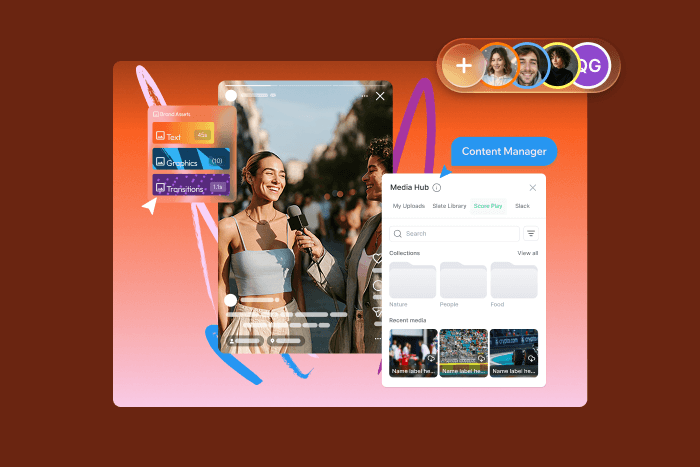
Slate maintains a single source of truth for logos, colors, fonts, stickers, and motion elements. Campaign creators always access the latest approved assets—no digging through folders or using outdated files.
Rapid Content Customization
Marketing and social teams can quickly customize on-brand posts and stories for different social media platforms and markets. Instead of waiting in design queues, marketers generate valuable content directly from shared templates.
Streamlined Collaboration
Shared templates, comment threads, and approval flows keep agencies and in-house teams aligned. Whether you’re managing organic campaigns across three markets or coordinating paid campaigns with external partners, Slate ensures consistent formatting and faster turnaround from brief to publish.
Scale Without Sacrificing Quality
As campaign volume grows, Slate helps teams actively engage across multiple channels without losing brand consistency. The same templates that work for one product launch adapt easily for your next seasonal promotion.
Ready to simplify your 2025–2026 social media campaign roadmap? Visit www.slateteams.com to see real campaign examples and explore how Slate fits into your workflow.
FAQ
How long should a social media campaign run?
Most campaigns run 4–12 weeks, depending on objectives and complexity. A 4-week flash sale in November 2025 suits tactical promotions with clear purchase deadlines. An 8-week app launch in early 2026 allows time for awareness building before driving conversions. A 12-week enrollment push for a September 2026 university intake accommodates the longer decision cycles of B2B or high-consideration offers.
At minimum, your campaign duration should allow enough time to test creative variations, optimize targeting, and gather statistically meaningful data—typically at least 3–4 weeks for reliable insights.
How much budget do I need for a first campaign?
Budget ranges vary significantly by scale and objectives. Small local brands might start with $1,000–$3,000 in paid spend plus basic production costs for existing customers and lookalike audiences. Growth-stage brands often invest $10,000–$50,000 across multiple channels for awareness or lead generation goals.
Prioritize one or two channels and a limited set of high-quality assets rather than spreading a tiny budget thin. Using social media tools like Slate can lower ongoing production costs by enabling template reuse—reducing per-asset expenses by 30% or more after initial setup.
Do I need separate content for each platform?
The core idea and raw footage can be shared across different social media platforms, but each channel needs its own optimized version. This includes format (9:16 vs. 1:1 vs. 16:9), length (15 seconds vs. 60 seconds), caption style, and CTAs.
For example, a 60-second product video becomes:
A 9:16 TikTok with trending audio and quick cuts
A 15-second Instagram Story with a swipe-up CTA
A 30-second LinkedIn cut with professional context and subtitles
Slate helps create multiple on-brand crops and variants from the same base creative, making it practical to tailor content for each network without duplicating effort.
How many posts do I need for a 6‑week campaign?
For a mid-size brand running a 6-week campaign, plan approximately:
2–3 Instagram feed posts per week (12–18 total)
3–5 Instagram Stories per week (18–30 total)
2–3 TikToks per week (12–18 total)
2 LinkedIn posts per week (12 total)
Frequency depends on audience tolerance and internal capacity. Quality plus consistency beats sheer volume every time. Plan “evergreen” support content for steady presence, plus 1–2 “big moment” hero posts for each phase (tease, launch, sustain) to keep your audience engaged.
When should I bring in a tool like Slate versus using native apps only?
Consider social media management platforms like Slate once your team manages multiple brands, markets, or monthly campaigns—and struggles with asset chaos, inconsistent branding, or slow approval cycles. Native apps work fine for single-brand teams with low posting volume.
Slate adds the most value when several people (social managers, designers, agencies) need to work from the same templates and asset library at speed. If you’re planning significant 2025–2026 campaigns and want to scale production without sacrificing brand control, explore how Slate can support your emerging trends and creative ideas.