Slate Team

Key Takeaways
Social media promotion is about planning campaigns, choosing the right platforms, and publishing consistent, on-brand content that supports clear business goals.
Visuals (images, short-form video, Reels, Stories) and compelling copy (hooks, CTAs, hashtags) are the core drivers of visibility and engagement.
Timing, frequency, and platform-specific optimization (e.g., Reels on Instagram, Shorts on YouTube, carousels on LinkedIn) dramatically impact promotion results.
Tools like Slate help teams streamline social content creation, keep everything on-brand, and collaborate efficiently on campaigns.
Successful promotion requires continuous testing, analytics review, and iteration—not one-off posts.
What Is Promotion With Social Media (And Why It Matters in 2026)?
Global social media users surpassed 5 billion in 2025, and the average person now spends over two hours daily scrolling through feeds, watching Reels, and engaging with content. For marketing teams, this makes social platforms the default promotion channel for reaching potential customers at scale.
Promotion with social media means the planned, goal-driven use of platforms like Instagram, TikTok, LinkedIn, Facebook, X, and YouTube to drive awareness, website traffic, sign-ups, or sales. It’s not about posting randomly and hoping something sticks. It’s about coordinating organic posts, paid campaigns, creator partnerships, and even employee advocacy into cohesive social media marketing campaigns that deliver measurable business results.
Modern promotion blends these elements together. A product launch might combine teaser Reels, influencer collaborations, LinkedIn posts for B2B decision-makers, and retargeting ads for people who visited the landing page but didn’t convert. Algorithm changes in 2024–2025—particularly the shift toward short-form video, saves, and watch time—force brands to be more strategic and creative than ever before.
This is where workflow matters. Slate simplifies promotion with social media by enabling teams to create consistent, on-brand content designed to support digital media promotions and campaign launches. Whether you’re promoting a brand, offer, or event via social media, Slate streamlines the production of promotional posts, videos, and visuals that align with your overall social media marketing strategy.
Set Clear, Measurable Goals For Your Social Promotions
Every social media promotion—whether it’s a product launch, event push, or seasonal sale—should start with specific goals and dates. Without clear objectives, you’ll struggle to know what success looks like or how to measure it.
Use SMART-style goals tied to real business outcomes. For example:
“Increase sign-ups for our April 2026 webinar by 25% via LinkedIn and X”
“Drive 1,000 visits to our new pricing page during March 2026 promo”
“Generate 200 qualified leads from our summer campaign using Instagram and TikTok”
Common promotion goals fall into four categories:
Goal Type | What You’re Measuring | Example Metrics |
|---|---|---|
Awareness | How many people see your content | Reach, impressions, video views |
Engagement | How people interact with your content | Comments, saves, shares, DMs |
Performance | Direct actions people take | Clicks, leads, purchases, sign-ups |
Community | Audience participation and loyalty | User generated content, referrals, mentions |
Goal clarity guides everything else. If your objective is awareness, you’ll prioritize reach-optimized Reels and Stories. If it’s lead generation, you’ll focus on carousel posts with strong calls to action and landing page links. Your social media marketing plan should spell out which metrics matter most for each campaign.
Example promotion brief:
Goal: Drive 500 registrations for June 2026 virtual summit
Target audience: Marketing managers at mid-size B2B companies
Platforms: LinkedIn (primary), Instagram (secondary)
Timeline: May 15–June 5, 2026
KPIs: Registrations, click-through rate, cost per registration
Know Your Audience And Choose The Right Platforms
Effective social media marketing starts with knowing who you’re trying to reach and where they actually spend their time. Promoting on every platform sounds comprehensive, but it dilutes your efforts and burns out your team.
Build or refine basic audience personas by considering:
Age groups and locations
Job roles and industries
Interests and pain points
Preferred content formats (video, text, images)
Different social media platforms attract different demographics. Here’s how to think about platform-audience pairings:
Platform | Primary Audience | Best For |
|---|---|---|
TikTok | Gen Z, young Millennials | Trend-based awareness, storytelling, top-of-funnel |
Millennials, Gen Z | Visual promotions, Reels, Stories, product launches | |
B2B professionals, decision-makers | Webinars, case studies, thought leadership | |
Broader age groups, local audiences | Community building, groups, paid campaigns | |
YouTube | All demographics | Long-form tutorials, Shorts, evergreen content |
X | News-driven, real-time audiences | Announcements, live events, conversations |
For smaller teams, focus your social media promotion on 2–3 primary social media channels instead of trying to be everywhere. Use built-in analytics—Instagram Insights, LinkedIn Analytics, TikTok Analytics—plus Google Analytics source/medium reports to confirm where your current website traffic and conversions actually come from.
Platform Snapshots For Promotion
Instagram is ideal for visually driven promotions. Reels, Stories, carousels, and product tags make it the go-to for launches, limited-time offers, and creator collaborations. Images on Facebook yield 2.3x more engagement than text posts, and Instagram’s algorithm now prioritizes Reels for their high completion rates.
TikTok thrives on trend-based, short-form video content. Sounds, duets, and creator partnerships make it powerful for awareness and top-of-funnel promotions. A hair care brand might use TikTok for trend-jacking product announcements while building deeper connections through storytelling.
LinkedIn serves B2B promotions exceptionally well. Event registrations (webinars, conferences), product feature rollouts, case studies, and thought-leadership content tied to launches perform strongly here. The platform emphasizes professional network density, making it excellent for reaching decision-makers.
Facebook remains valuable for groups, local and multi-generational audiences, and paid campaigns with granular targeting. Facebook users span multiple age groups, making it useful for promotions that need broad reach across demographics.
X functions as a real-time channel for announcements, live event commentary, and driving conversations around launches using branded hashtags. It’s where news breaks and conversations spark quickly.
Design A Cohesive Social Promotion Campaign
Posting once about your new product and hoping for results isn’t a strategy. A planned campaign that runs over defined dates—like a 10-day launch sequence in May 2026—with a clear narrative arc will dramatically outperform random posts.
Build a simple campaign framework with three stages:
Pre-launch: Teasers, waitlists, countdown posts, behind the scenes content
Launch: Main announcement, demo content, feature breakdowns, live Q&A sessions
Post-launch: Social proof, testimonials, FAQs, retargeting, recap posts
Map your social media content to each stage. Countdown graphics build anticipation. Behind the scenes videos humanize your brand. Feature breakdowns educate your relevant audience. Testimonials and personal stories provide social proof that encourages conversions.
Slate can host reusable templates so all campaign visuals—Stories, feed posts, Reels covers—share fonts, colors, and layouts. This keeps your brand identity—- consistent even when multiple team members are creating content under deadline pressure.
Example: Three-week campaign for June 2026 product update
Week | Stage | Content Mix |
|---|---|---|
Week 1 | Pre-launch | Teaser Reels, “Coming Soon” Stories, LinkedIn carousel on problem/solution |
Week 2 | Launch | Announcement video, feature demo, Instagram Live Q&A, LinkedIn posts with case study |
Week 3 | Post-launch | Customer testimonials, FAQ carousel, UGC reshares, retargeting ads |
Build A Simple Social Content Calendar
A content calendar transforms your social media strategy from reactive posting to intentional promotion. Plot specific post types and channels by date and time.
Example calendar for a 7-day campaign:
Date | Time | Platform | Content Type |
|---|---|---|---|
April 2 | 10:00 AM | Teaser carousel | |
April 2 | 6:00 PM | Story countdown | |
April 3 | 12:00 PM | TikTok | Behind-the-scenes video |
April 3 | 6:00 PM | Reel demo | |
April 4 | 9:00 AM | X | Announcement tweet thread |
April 4 | 2:00 PM | Feature breakdown post | |
April 5 | 10:00 AM | Carousel testimonials |
During active campaigns, daily short-form video content plus 3–4 feed posts per week is realistic for most teams. Include key internal milestones in your calendar: asset deadlines, approval checkpoints, and collaboration windows for design and copy teams.
Slate speeds up calendar execution by letting teams quickly adapt one core creative into multiple ratios and formats for each channel. Create once, export for Instagram Stories, LinkedIn posts, and TikTok—all on-brand and ready to publish.
Create Promotional Content That Actually Gets Attention
Strong creative—visuals plus copy—is what turns algorithms and scrollers in your favor. Most social media platforms reward content that captures attention quickly and keeps people watching or reading.
The first seconds of video and the top 1–2 lines of captions determine whether someone stops scrolling or keeps moving. Your promotional content needs to earn attention immediately.
Core content formats to include in most social media campaigns:
Short-form video: Reels, TikToks, Shorts (15–60 seconds)
Carousels: Multi-slide educational content or feature breakdowns
Stories: Time-sensitive updates, polls, behind-the-scenes
Static graphics: Announcements, quotes, key offers
Live sessions: Q&As, product demos, event coverage
Focus on benefits and outcomes for your target audience—time saved, problems solved, experiences gained—rather than just listing features or discounts. Video content garners 1,200% more shares than static images, making it essential for any serious social media promotion effort.
Visuals: Images, Reels, Shorts, And Stories
In 2024–2026, algorithms favor native, platform-first visuals. Instagram pushes Reels. YouTube pushes Shorts. TikTok rewards completion rates. This impacts how you plan promotional content.
Best practices for promotional visuals:
High contrast and clear focal point
Minimal on-image text (most social media platforms compress text readability)
Strong branding elements (logo, colors, visual identity)
Mobile-first layouts (designed for vertical viewing on mobile devices)
Multiple images in carousel format for deeper engagement
Use series-based creatives—a set of Stories templates or carousel layouts that can be quickly updated for each campaign. This builds recognition and saves production time.
Slate allows teams to create on-brand templates and reuse them for recurring promotions. Monthly offers, quarterly launches, and recurring events all get polished, consistent visuals without starting from scratch each time.
Don’t forget accessibility basics: readable text sizes, strong color contrast, and descriptive alt text or captions for key visuals. 85% of Facebook videos are watched muted, so captions aren’t optional—they’re essential.
Captions, Hooks, And Calls To Action
Promotional copy should start with a clear hook—a bold benefit, question, or result—within the first line or two. Social media users decide in seconds whether to keep reading.
Use this simple structure:
Hook: Grab attention with a benefit or provocative question
Context: Brief story or explanation
Offer details: Key value proposition
CTA: Specific action with urgency
Examples of strong CTAs matched to goals:
Goal | CTA Example |
|---|---|
Event registration | “Save your seat—limited spots available” |
Content download | “Get the playbook free” |
Product trial | “Try it today—no credit card required” |
Engagement | “DM us ‘INFO’ for details” |
Adapt tone by platform. TikTok and Instagram reward conversational, personality-driven copy that reflects your brand’s personality. LinkedIn posts should be more professional and specific while maintaining your brand voice. The key is consistency across channels while respecting platform norms.
Slate’s consistent visual framework helps captions feel more recognizable across channels. When people see your fonts, colors, and layouts, they know it’s part of the same campaign before they even read the copy.
Hashtags, Mentions, And Social Proof
Hashtags increase discoverability—up to 12.6% on X (formerly Twitter)—but strategy matters more than quantity.
Hashtag guidelines by platform:
Platform | Recommended Count | Type |
|---|---|---|
3–5 | Mix of branded, campaign, niche | |
TikTok | 3–4 | Trending + niche + branded |
X | 1–2 | Campaign + topic |
1–3 | Industry + professional |
Tag partners, speakers, collaborators, and venues when relevant. This extends reach and encourages resharing. When industry experts or loyal customers share your promotional content, it builds credibility with their audiences.
Incorporate social proof into promotional posts:
Short testimonials from happy customers
Review snippets or star ratings
Logos of recognized clients
Screenshots of positive comments
User generated content—customers using your product or attending your event—makes powerful promotional material. Share with clear credit to creators. This community driven engagement builds trust because consumers trust peer recommendations 92% more than traditional ads.
Slate templates make it easy to drop testimonial quotes or user photos into consistent, branded layouts, turning social proof into polished promotional assets quickly.
Use Paid Promotion And Collaborations To Amplify Reach
Organic reach alone is rarely enough for major promotions. Facebook’s organic reach has dropped below 5% for many pages, and most social media platforms now prioritize paid content in competitive feeds.
Allocate modest paid budgets to high-intent campaigns—product drops, limited offers, webinars—rather than boosting every post. Social advertising spend hit $230 billion globally in 2024, projected to grow 10% annually. Even small budgets can drive significant results when targeted correctly.
Start with simple paid formats:
Instagram and Facebook feed + Story ads
TikTok in-feed ads
LinkedIn Sponsored Content for B2B promotions
Creator and influencer collaborations extend reach into niche communities. Micro-influencers (10k–100k followers) yield 60% higher engagement rates than celebrities at lower costs, making them ideal for promotion partnerships. Macro-influencers provide broader brand exposure for major launches.
Track basic paid metrics:
Metric | What It Tells You |
|---|---|
CPM | Cost to reach 1,000 people |
CPC | Cost per click to your destination |
CTR | Percentage of viewers who click (average 1–2%) |
Conversion rate | Percentage who complete desired action |
Compare creative performance across ads to refine future promotional assets. What hooks, visuals, and CTAs drive the best results? Use those insights to create content that performs better with each campaign.
Employee Advocacy And Brand Ambassadors
Employees, partners, and power users can act as brand advocates, extending reach far beyond official brand accounts. Their personal connections carry authenticity that branded posts can’t replicate.
Create ready-to-share assets and caption prompts that team members can personalize when posting about a campaign. This makes advocacy frictionless—people are more likely to participate when you reduce the effort required.
Slate helps produce easily shareable story frames, image templates, and short video assets tailored for internal advocates. Everyone stays on-brand while adding their own voice.
Simple asks during key promotions work well:
“Post one Story about our April launch this week”
“Share this LinkedIn post on launch day”
“Add our campaign hashtag to your next relevant post”
Establish transparent guidelines so advocates stay on-message and compliant with platform disclosure rules. Authenticity matters, but so does consistency with your company culture and brand standards.
Streamline Social Promotion Workflows With Slate
Promotion success often depends on how quickly and consistently teams can produce on-brand content across multiple platforms. When workflows break down, campaigns suffer.
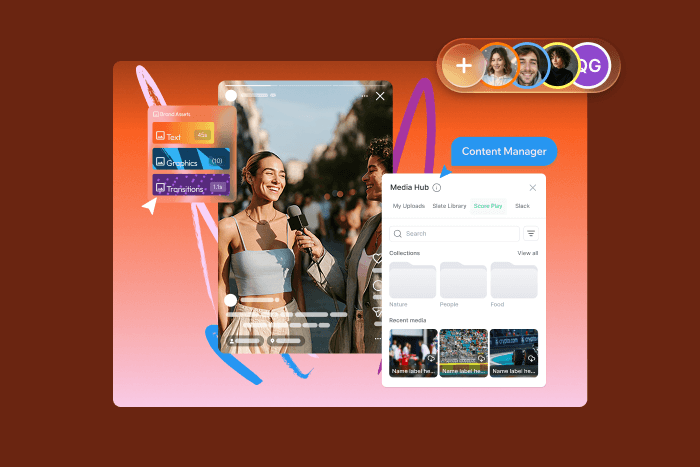
Slate lets marketing, design, and social teams build shared templates for posts, Stories, Reels covers, and short videos that match brand guidelines. By improving collaboration and content workflows, Slate helps businesses execute effective social media marketing promotions and maximize visibility across platforms.
Teams can swap images, update copy, and export assets in the right formats for each platform—reducing bottlenecks before and during campaigns. No more waiting on designers for simple asset variations. No more off-brand content slipping through because someone used the wrong font.
Collaboration benefits are significant: everyone works from the same asset library and template sets, which cuts down on off-brand or outdated promotional content. Your social media presence stays consistent whether posts come from marketing, sales, or customer success.
Example workflow:
Prepping all creatives for a 7-day event promotion in Slate, then quickly adjusting visuals as registration milestones are hit. Template updates cascade across all formats—Instagram Stories, LinkedIn posts, Facebook ads—keeping messaging aligned as the campaign evolves.
Measure, Learn, And Improve Every Promotion
Data review after each campaign is what turns social media promotion into a repeatable, improving system. Without measurement, you’re guessing.
Key metrics to track by goal:
Goal | Primary Metrics | Secondary Metrics |
|---|---|---|
Awareness | Reach, impressions | Video views, follower growth |
Engagement | Engagement rate, saves | Comments, shares, DMs |
Performance | Clicks, conversions | Cost per acquisition, ROI |
Use social media management platforms like Meta Business Suite and Sprout Social alongside Google Analytics to connect social activity to website traffic and conversions. Track which platforms, formats, and messaging drive the best results.
Compare performance across formats:
Did Reels outperform carousels for this campaign?
Which LinkedIn posts drove the most website traffic?
What time slots generated highest audience engagement?
Keep a simple “promotion log” where each campaign’s goals, creative highlights, best-performing posts, and lessons learned are recorded. This becomes your own strategy playbook over time.
Insights from one promotion should directly shape the next. If behind-the-scenes Reels drove the most sign-ups, lead with that format in your next campaign. If certain CTAs converted better, use them again. Competitive analysis of what works in your industry provides additional insights to stay up to date with trends.
Build brand awareness systematically by documenting what resonates with your relevant audience. Over time, you’ll develop a content strategy that reliably delivers business outcomes and helps you gain followers who become loyal customers.
FAQ: Promotion With Social Media
How far in advance should I plan a social media promotion?
Plan small promotions—a 3-day flash sale or short webinar push—at least 2–3 weeks in advance. This allows time for creative production, team reviews, and approvals without last-minute scrambling.
Bigger launches or multi-channel campaigns (product releases, conferences, seasonal campaigns) need 6–8 weeks of lead time. This includes building templates and assets in Slate, coordinating with partners, and allowing buffer for unexpected delays.
Even a simple one-page promotion brief and basic content calendar will improve results compared to last-minute posting. Structure beats inspiration when you’re trying to generate leads and drive traffic consistently.
How often should I post during a promotion without overwhelming followers?
Frequency depends on platform, but daily short-form content (Reels, Stories, TikToks) plus 3–5 feed posts per week is typically acceptable during active campaigns. Social media networks reward consistent posting during promotional periods.
Vary your angles so followers see different value—not the same promo graphic repeated. Rotate between behind the scenes content, testimonials, FAQs, countdowns, and educational content. Each post should offer something new while reinforcing the core message.
Monitor unfollows and negative feedback through your social media management platforms. If those metrics spike, slightly reduce frequency or adjust messaging. Encourage followers to engage rather than tune out.
Do I need a big budget for paid social promotion?
Effective promotion can start with modest test budgets—$10–$50 per day per campaign—to identify winning creatives and audiences. You don’t need massive spend to learn what works.
Focus limited spend on high-intent actions: event registrations, lead magnets, product launches, customer acquisition campaigns. These drive measurable business results rather than vanity metrics. Social ads targeted to specific behaviors and interests outperform broad campaigns.
Use learnings from small tests (click-through rates, conversion costs) to decide whether to scale budgets or refine creatives before investing more. Build relationships with your audience through valuable content before asking for paid conversions.
What if I don’t have a dedicated designer or video editor?
Use a small library of reusable templates for posts and stories that can be quickly updated with new text and imagery for each promotion. Create content systems rather than creating from scratch every time.
Tools like Slate are built for non-designers, helping teams produce polished, on-brand graphics and short videos quickly. You don’t need advanced skills to maintain professional visual identity across campaigns.
Prioritize clarity, consistency, and strong messaging over complex designs. A simple, on-brand graphic with compelling copy will outperform a complicated design that confuses your message. Focus on what spark conversation and drive traffic to your offers.
How can I keep promotions consistent with my overall brand?
Document simple brand basics for social: color palette, fonts, logo usage, tone of voice, and visual dos and don’ts. This becomes your reference for every piece of own content you create.
Setting up brand-locked templates in Slate ensures every promotional asset follows these rules, regardless of who creates it. New team members, agencies, and collaborators can all produce on-brand content without extensive training.
Conduct periodic audits of recent blog posts, linkedin posts, and social media content across multiple channels to confirm that visuals and messaging still feel cohesive and aligned with your brand voice. As your social presence grows, consistency becomes even more important for building recognition and trust with potential customers across different social media platforms.
Ready to streamline your team’s social media promotion workflow? Visit Slate to see how consistent, on-brand content creation can support your next campaign launch and help you increase brand awareness across every platform.