Slate Team

Influencer marketing has officially graduated from experimental line item to core growth engine. By 2025, the global influencer marketing industry surpassed $33 billion in value, and the broader creator economy is now projected to reach $1.35 trillion by the early 2030s. These numbers reflect a fundamental shift in how brands allocate resources and build customer relationships.
Several forces are accelerating this transition. Rising advertising costs on traditional platforms have squeezed returns. The erosion of third-party cookies and tightening privacy regulations have made signal-based targeting less reliable. Meanwhile, consumer attention continues to fragment across social media platforms that reward authentic, creator-led content over polished ads.
This article explores the key trends shaping the future of influencer marketing: performance accountability replacing vanity metrics, the growing demand for authenticity, AI’s expanding but supportive role, platform-specific strategies for TikTok, Instagram, and YouTube, and emerging spaces like live shopping and Web3. Throughout, we’ll examine what brands need to build sustainable, high-performing creator programs.
For brands navigating this complexity, platforms like Slate are becoming essential infrastructure—enabling fast, on-brand content production with creators across multiple platforms while maintaining the consistency that makes measurement meaningful.
The Definition and Evolution of Influencer Marketing
Need to revolutionize your marketing approach? Influencer marketing is a game-changing form of social media marketing that centers on powerful partnerships between brands and social media influencers to promote products, services, or campaigns. Unlike traditional advertising that feels stale and disconnected, influencer marketing works by leveraging the authentic relationships influencers have built with their followers, allowing your brand to reach highly engaged target audiences in ways that feel personal and trustworthy. It's no wonder that businesses are flocking to this dynamic approach!
Over the past decade, you've witnessed the influencer marketing industry undergo a remarkable transformation that's nothing short of revolutionary. What began as simple celebrity endorsements and basic product placements has evolved into a sophisticated ecosystem spanning multiple social media platforms and diverse influencer types. Today, your brand can collaborate with nano influencers—those with just a few thousand followers in niche communities—up to macro and even mega influencers who command millions of loyal fans. This incredible diversity enables you to tailor your influencer marketing strategy to specific audience demographics, campaign goals, and budget constraints with unprecedented precision.
The core strength of influencer marketing lies in its ability to shape consumer opinions and drive purchasing decisions through genuine, relatable content that resonates deeply with audiences. Social media influencers create sponsored influencer content—ranging from captivating Instagram posts and viral TikTok videos to comprehensive YouTube tutorials and engaging live streams—that seamlessly integrates your brand messaging into their own content style. This approach not only increases brand awareness but also builds brand reputation and trust, as followers are more likely to engage with recommendations from creators they admire and follow religiously.
As the media landscape continues to fragment and traditional media loses ground, influencer marketing has become an invaluable tactic for brands seeking to increase brand visibility and connect with new audiences effectively. The explosive rise of the creator economy has empowered influencers to develop their own content, build personal brands, and even launch their own products, further blurring the lines between creator and entrepreneur. Imagine the possibilities when you tap into this thriving ecosystem!
Key trends shaping the future of influencer marketing include the fascinating emergence of virtual influencers and AI influencers, the explosive growth of video content that's capturing audiences worldwide, and the increasing importance of consumer trust and transparency. Your brand can also benefit from recognizing the value of long term creator partnerships, hybrid compensation models, and data-driven measurement—tracking key metrics like website traffic, engagement metrics, and measurable revenue to optimize your influencer marketing campaigns for maximum impact.
To succeed in this rapidly evolving field, you must focus on finding the right influencers who align perfectly with your brand values and target audience. This means carefully vetting potential partners for content quality, engagement rates, and audience fit, and building authentic partnerships that go far beyond one-off sponsored posts. By prioritizing ongoing education, staying attuned to key trends, and remaining agile in your marketing strategies, you can harness the full power of influencer marketing to drive real results—whether that's boosting sales, increasing brand awareness, or building genuine relationships with your audience that last.
In today's digital age, influencer marketing is no longer optional—it's an essential component of any forward-thinking marketing strategy that wants to stay competitive. As new platforms, tools, and trends continue to emerge at breakneck speed, brands that invest in authentic partnerships and measurable outcomes will be best positioned to thrive in the ever-changing world of social media and the creator economy. The sky's the limit for what you can achieve with the right influencer marketing approach!
From Awareness Channel to Commercial Engine
The days when influencer marketing worked primarily as a top-of-funnel buzz generator are over. Influencers now play a central role in modern marketing by bridging the gap between brands and consumers through authentic engagement. By 2026, leading brands treat creator content as performance media, measured on the same metrics as paid search and social ads: customer acquisition cost (CAC), average order value (AOV), lifetime value (LTV), and return on ad spend (ROAS).
The data supports this shift. Brands report that 171% more budget flowed into creator programs in 2025, with nearly two-thirds reallocating funds from traditional advertising channels like TV and display. During Cyber Week 2025, creator-driven sales nearly doubled orders for participating brands—demonstrating that social media influencers can drive immediate sales, not just awareness. Brands earn an average of $5.78 for every dollar spent on influencer marketing, with top-performing campaigns achieving up to $18 to $20 per dollar invested.
What’s changed is how brands deploy creator content across the customer journey:
Discovery: Creators introduce products through authentic storytelling that shapes consumer opinions
Education: Detailed reviews, tutorials, and comparisons help audiences evaluate purchasing decisions
Conversion: Affiliate links, promo codes, and shoppable posts create direct paths to purchase
Retention: Ongoing creator relationships reinforce brand loyalty and encourage repeat purchases
Influencer posts directly impact consumer behavior at each stage, serving as a key metric for campaign success and influencing purchasing decisions and engagement levels.
Top-performing teams now repurpose the best influencer content across ads, email campaigns, landing pages, and even in-store displays. This “content flywheel” approach maximizes ROI from every creator collaboration. Influencer partnerships are essential for building authentic, long-term brand integration and ensuring that content resonates with target audiences.
Slate helps teams quickly adapt and reformat creator content into multiple placements while maintaining brand consistency—turning a single TikTok into Instagram Reels, YouTube Shorts, and paid media assets without starting from scratch each time.
To stay ahead, brands need a comprehensive marketers plan that integrates influencer partnerships, social media, and brand marketing functions under a unified strategy for greater efficiency and competitive advantage.
Key Forces Shaping the Future of Influencer Marketing
Understanding the macro forces driving industry change is essential for any brand planning influencer marketing strategy through 2030. These forces determine which marketing tactics will work, which platforms will matter, and what capabilities teams need to build.
The primary forces reshaping the media landscape include:
Rising creator professionalism: Top creators now operate as multi-channel media brands with dedicated teams
Platform shifts: Short-form video dominates, while search-driven discovery (especially on TikTok and YouTube) reshapes content strategy
Regulatory scrutiny: FTC disclosure guidelines tightened significantly in 2024-2025, requiring transparent sponsored influencer content labeling
AI acceleration: Generative tools are becoming standard infrastructure for content production and analytics
Consumer demand for authenticity: Audiences increasingly reject polished ads in favor of genuine relationships with creators they trust. To build trust and engagement, brands must understand and align with their audience's preferences when selecting influencers and crafting campaigns.
Brands that build flexible processes and invest in adaptable technology—like Slate for content operations—will respond to these forces more effectively than those locked into rigid workflows.
1. The Performance & Accountability Mandate
The shift from vanity metrics to full-funnel measurement represents the most significant change in how brands evaluate influencer marketing efforts. Today, brands aim to measure success by tracking key metrics like reach, impressions, and engagement rate to evaluate how well their influencer marketing content is performing. Where marketers once celebrated reach and likes, they now demand click-throughs, conversions, new customer acquisition, and incremental lift.
This accountability mandate has driven standardization in attribution methods. UTM parameters, unique promo codes, platform-native analytics, and affiliate links now enable direct tracking across social platforms. Brands can finally compare creator performance against other channels competing for the same influencer marketing budget.
The results justify the investment: 9 in 10 marketers report that sponsored creator content outperforms brand content, and 83% note better conversion results. Creator programs are now managed with the same rigor as paid media—experimentation, cohort analysis, and ROAS targets are standard practice.
Consider a fitness brand running a product launch: by assigning unique tracking links to each creator and analyzing 90-day cohort data, they discovered mid-tier creators delivered 2x ROAS compared to mega influencers—insights impossible to surface with awareness metrics alone. To measure the success of influencer marketing campaigns, brands should also monitor conversion metrics like website traffic, sales, or sign-ups to assess whether their campaign is driving desired actions.
Regularly assessing these key metrics enables brands to determine if their influencer marketing objectives are being met and to adjust strategies as needed.
2. The Rise of Always-On, Long-Term Creator Partnerships
The one-off sponsored post that defined early influencer campaigns has given way to multi-quarter ambassador programs. Brands in 2026 increasingly prefer long term creator partnerships over transactional placements, recognizing that repeated exposure builds audience trust more effectively than scattered mentions. Influencer partnerships are now a key element of influencer marketing strategies, with brands increasingly creating long-term ambassador partnerships rather than relying on one-off campaigns to build trust with audiences.
This shift delivers measurable benefits. Brands running sustained creator relationships report engagement rates 30-50% higher than episodic deals. Content production costs decrease over time as creators internalize brand values and require less onboarding. And performance improves as audiences develop familiarity with the creator-brand pairing.
Compensation models have evolved accordingly. The recommended compensation structure for influencer marketing is a hybrid model that combines a base fee with performance-based payouts to align creator incentives with brand goals. Hybrid structures combining base fees with performance bonuses tied to sales align incentives between brand partners and creators. This approach transforms creators from vendors into genuine collaborators invested in campaign success.
Rather than managing hundreds of one-off relationships, leading brands now curate smaller rosters of 10-20 recurring creators, investing in depth over breadth. Slate helps maintain brand guidelines and creative consistency across these long-running collaborations, ensuring that even extended partnerships stay on-brand.
3. Human Trust, Authenticity, and “Unpolished” Content
Consumer trust in influencer content depends on perceived authenticity—and audiences in 2026 have become highly skilled at detecting insincerity. The polished, studio-style ad that might have worked in 2018 now triggers skepticism. What converts is raw, lightly edited, “day-in-the-life” video content that feels genuine. To build trust and engagement, brands must understand and align with the audience's preferences, ensuring that influencer partnerships and campaign content resonate with what the audience truly wants and values.
This preference for authenticity extends to content substance. Audiences seek balanced, honest reviews that include pros and cons, price comparisons, and real usage scenarios. The 64% of consumers who report greater purchase willingness from brands partnering with favorite influencers are responding to this honest approach.
Successful campaign execution now requires brands to loosen creative control while maintaining strategic guardrails. Creators need room to tell stories in their authentic voice—attempting to script every word produces content that feels forced and underperforms.
Practical guidance for brands:
Specify objectives and non-negotiables, but let creators lead execution
Embrace imperfection—UGC-style content consistently outperforms polished brand content
Accept that some creators will decline partnerships that don’t fit their niche audience
Recognize that authenticity and performance aren’t opposites—human connection drives sustainable results
4. AI’s Expanding but Supportive Role
AI has shifted from novelty (remember virtual influencers?) to core infrastructure in influencer marketing operations. By 2026, 86% of creators use generative tools for ideation, captions, video editing, and content versioning. Brands leverage AI for creator discovery, performance forecasting, and campaign optimization.
However, consumer research reveals clear boundaries. Over 80% of audiences want AI-generated content clearly labeled, and consumer trust still relies on human faces and stories. Only 37% of consumers show even fleeting interest in AI influencers—the vast majority prefer real creators they can relate to.
The most effective applications of AI support human creativity rather than replacing it:
Predictive matching to identify high-potential creator-brand pairings
Automated versioning to adapt content across social media platforms
Performance forecasting to optimize campaign timing and budget allocation
Caption generation and editing assistance to accelerate content production
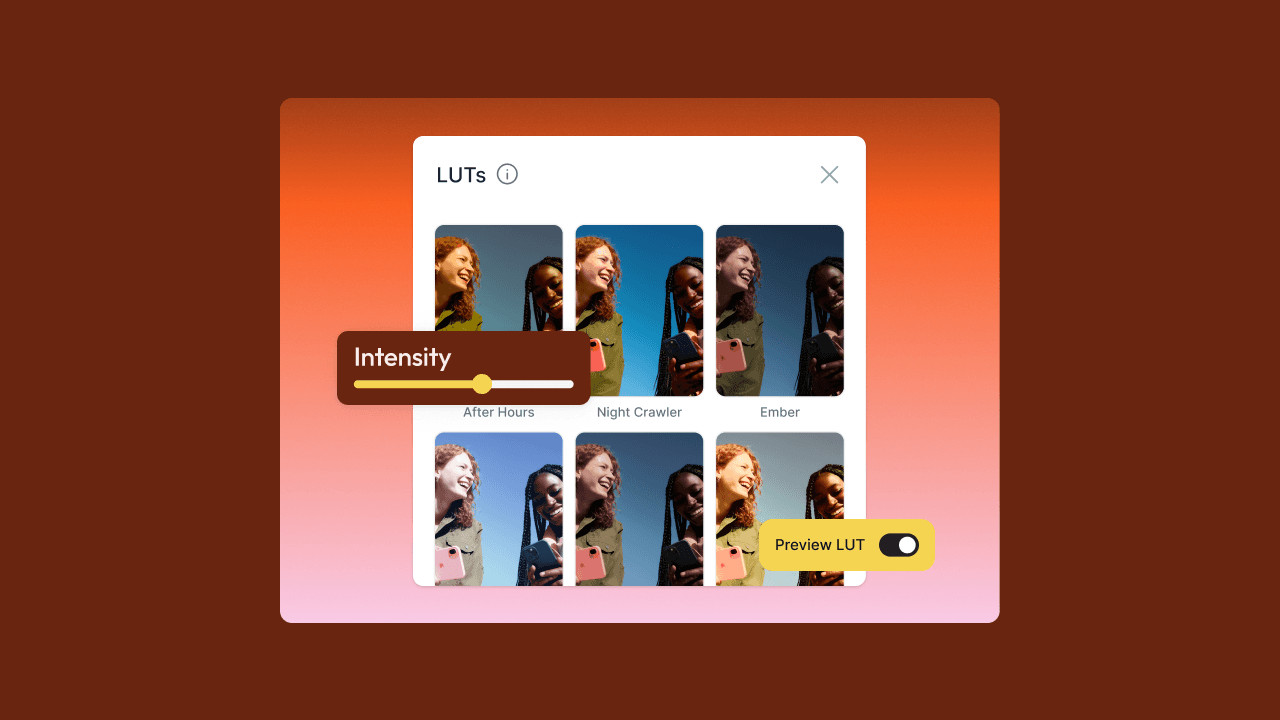
Tools like Slate can plug into AI workflows to auto-generate on-brand templates, captions, and visual treatments at scale—accelerating production without sacrificing the authentic creator voice that makes influencer marketing work.
Platform Shifts: Where the Future of Influencer Marketing Will Happen
Platform dynamics in 2026 are reshaping content formats, discovery mechanisms, and commerce integrations. Creators now behave like multi-platform micro-media companies, distributing content across TikTok, Instagram, YouTube, and emerging channels—each with distinct algorithmic requirements and audience behaviors. The importance of an influencer's followers is growing, as their engaged audiences help expand a brand's reach and generate organic buzz through influencer marketing campaigns.
Success requires platform-specific strategies rather than one-size-fits-all approaches. Search and recommendations algorithms differ dramatically across platforms, as do commerce integrations and content formats. A unified social strategy that integrates audience engagement, content creation, and brand marketing is essential for building an effective ecosystem and fostering long-term impact. Brands that understand these nuances invest more effectively.
Slate supports cross-platform content adaptation, enabling teams to customize formats for each platform without rebuilding every asset from scratch—essential as creators expand across multiple platforms. The rise of social commerce is turning influencers into direct sales drivers through features like TikTok Shop and Instagram Checkout. Frictionless sales are evolving, allowing users to purchase products directly from influencer content without leaving the application.
TikTok and Short-Form Video: Culture and Discovery
TikTok continues to dominate culture creation, product discovery, and short-form storytelling in 2026. The platform’s search behavior has exploded since 2023, with younger audiences increasingly using TikTok as their primary discovery engine. “TikTok made me buy it” waves remain powerful drivers of product awareness and boosting sales. Influencer posts on TikTok can quickly go viral, directly influencing purchasing decisions and serving as a key metric for campaign success.
Live shopping adoption accelerated significantly, with 32% of brands already running TikTok Shop activations and another 25% planning entry. In-feed purchasing adoption nearly doubled year-over-year, contributing to a 51% jump in influencer-driven spend during peak events. An influencer's followers amplify exposure and drive sales during live shopping events, creating organic buzz and expanding brand reach.
Effective TikTok campaigns require native design:
Hook-driven openings that capture attention in the first second
Sound-on optimization leveraging trending audio
Rapid creative iteration testing multiple cuts and captions
Authentic, unpolished aesthetics matching platform culture
Slate enables teams to create TikTok-first assets quickly, with reusable templates for multiple creators and markets—essential when trends move in days or hours, not weeks.
Instagram and the Social Graph Reimagined
Reels, Stories, and Close Friends lists keep Instagram central to influencer marketing, especially for lifestyle and commerce verticals. The platform’s shopping features and creator marketplace continue maturing, making Instagram essential for brands seeking to increase brand awareness while driving direct conversion. Influencer partnerships are essential for brands to maximize the platform's potential, enabling more authentic collaborations that drive both awareness and conversion.
Carousels remain valuable for deeper product education, allowing creators to walk audiences through features, comparisons, and use cases. The combination of aspirational grid content with candid behind-the-scenes Stories creates a fuller picture that builds brand visibility and trust.
Maintaining consistent visual identity across Reels, Stories, and grid posts is critical for brand reputation. Audiences expect cohesion, and fragmented visual presentation undermines credibility. Slate helps teams maintain this consistency by providing shared templates, fonts, and visual elements that work across all Instagram formats.
YouTube and Searchable, Evergreen Influence
Many experts consider YouTube the “hot ticket” for 2026 influencer marketing due to its evergreen discoverability and high-intent search traffic. Unlike the fast-burn of short-form content, YouTube videos can drive views and conversions months or years after publication. Brands can measure success by tracking the long-term performance of influencer posts, monitoring metrics such as views, engagement, and conversions over time to evaluate sustained impact.
Effective formats include:
Deep-dive product reviews that answer specific buyer questions
Tutorials demonstrating real-world product applications
Comparison videos helping audiences evaluate alternatives
Long-form storytelling that builds genuine relationships with creators
YouTube’s features—Chapters, description links, pinned comments, and cards—support direct commerce and tracking better than most platforms. This infrastructure makes YouTube particularly valuable for brands focused on measurable revenue and attribution.
Slate can help create brand-safe graphic packages, lower-thirds, and end screens that creators can easily integrate into YouTube content while maintaining brand consistency across a roster of video partners.
Emerging Spaces: Live Shopping, Web3, and Beyond
Live shopping experiments have expanded significantly since 2023, with platforms like TikTok and YouTube rolling out integrated purchasing features. While results remain mixed, creator-hosted live streams consistently outperform brand-only broadcasts—the human element drives engagement even in new formats.
Early Web3-style activations are gaining traction in specific communities: token-gated access to exclusive content, collectible drops tied to creator moments, and loyalty NFTs integrated with creator programs. Brands using creators as hosts and community leaders in these spaces see engagement 40% higher than brand-only initiatives. As these emerging spaces evolve, it is crucial for brands to vet influencers thoroughly—evaluating authenticity, conducting background checks, and ensuring alignment with brand values—before forming partnerships to maximize effectiveness and maintain trust.
One concrete example: a streetwear brand partnered with three creators for a limited-drop live stream in early 2026, selling out entirely within 90 minutes through creator promotion alone—demonstrating how social media posts and live interaction combine for direct conversion.
Slate positions as a way to standardize branding for these experimental channels without slowing teams down—essential as brands test new audiences and formats while maintaining consistent identity.
Evolving Creator Landscape: From Influencers to Multi-Channel Media Brands
The creator landscape has professionalized dramatically. Top creators now function like small media companies, with dedicated teams including video editors, managers, agents, and analytics leads. They think in terms of long-term IP strategies, product development, and recurring revenue streams—not just sponsored social media posts.
Even nano and micro influencers increasingly operate with professional mindset, treating personal brand development as a career investment. This professionalization affects every aspect of brand-creator relationships: negotiation complexity, creative control expectations, and measurement demands.
Brands must upgrade their own operations and tools to collaborate effectively at this new level. Working with professional creators requires professional infrastructure—centralized asset management, streamlined workflows, and consistent brand systems that external partners can easily adopt.
Creators by Size: Micro, Nano, and “Mid-Tier” Powerhouses
The creator ecosystem segments by reach, but brand value often correlates inversely with follower count. Nano influencers (1K-10K followers) and micro influencers (10K-100K) consistently drive outsized engagement and trust in niche communities, with engagement rates 5-10x higher than macro influencers.
Mid-tier creators (100K-500K) represent a growing sweet spot, combining meaningful scale with authentic connection and subject-matter expertise. Unlike traditional celebrities or mega influencers, they maintain the accessibility that builds consumer trust.
Effective influencer marketing strategy often involves tiered programs:
A handful of larger faces for reach and brand visibility
A deep bench of mid-tier experts for credibility and conversion
A long tail of niche specialists reaching specific audience demographics
Category-specific creators—fitness coaches, B2B SaaS reviewers, fintech educators, beauty specialists—often outperform general lifestyle influencers for targeted campaigns because they’ve already earned trust within their niche audience.
Creators as Strategic Partners and IP Owners
Leading creators now co-develop products, collections, and even companies with brand partners. These relationships go far beyond paid placements—creators bring creative direction, audience insight, and real-time feedback loops that shape product development itself.
The shift from transactional placements to co-created IP represents a fundamental evolution. Signature product lines, recurring content series, and exclusive collaborations create value for both parties while delivering authentic partnerships that audiences recognize as genuine.
Consider a fintech creator who co-developed a signature financial tool line with a brand partner: promoted cross-channel through the creator’s own content, the collection sold out within days—demonstrating how creators function as full commercial partners, not just media channels.
Slate helps unify the visual identity across all these co-branded assets and social touchpoints, ensuring that signature collections and collaborative content maintain consistent brand presentation.
What Creators Expect from Brands in 2026
Creator expectations have evolved significantly. Today’s professional creators expect:
Transparent performance data: Creators want to see how their content performed and understand what’s working. Brands that share insights build stronger, more collaborative relationships.
Fair hybrid compensation: Base fees plus performance bonuses tied to sales have become standard. Purely performance-based models feel extractive; flat fees alone don’t align incentives.
Creative respect: Creators expect meaningful input into narrative and execution. Excessive revision cycles and prescriptive briefs erode partnerships and produce worse content.
Streamlined workflows: Clear briefs, centralized asset libraries, and fast approvals reduce friction. Creators working with well-organized brands can produce more and better content.
Poor brand behavior—like demanding 10+ revision rounds or treating creators as interchangeable freelancers—quickly damages brand reputation within creator communities. Word travels fast, and the right influencers become harder to recruit.
Slate addresses these expectations by centralizing assets, templates, and brand guidelines, reducing friction on both sides and making collaboration feel professional rather than chaotic.
Building a Future-Ready Influencer Marketing Strategy
Building influencer marketing campaigns that perform in 2026 and beyond requires both strategic clarity and operational excellence. Goals and positioning must be defined clearly, but success ultimately depends on processes, tools, and measurement frameworks that enable consistent execution.
The brands winning with creators use them at every funnel stage: awareness through discovery content, education through reviews and tutorials, conversion through trackable links and commerce integrations, and retention through ongoing creator relationships that reinforce brand loyalty. Influencer partnerships are essential for building sustainable programs, as long-term collaborations foster authentic relationships and more effective brand integration. As part of developing these strategies, it is crucial to vet influencers thoroughly to ensure they align with brand values and campaign goals.
A platform like Slate acts as the creative backbone allowing teams to execute these marketing strategies at scale—providing the infrastructure that makes sophisticated creator programs operationally feasible.
Clarify Objectives and Choose the Right Metrics
Effective influencer marketing efforts start with specific objectives tied to business outcomes, not just “awareness” as a vague goal. Common objective categories include:
Objective | Key Metrics | Creator Role |
|---|---|---|
Product launch | Reach, views, conversation volume | Generate discovery and buzz |
Market entry | New customer acquisition, CAC | Convince consumers to try |
Loyalty growth | Repeat purchase rate, LTV | Reinforce purchase decisions |
Content generation | Volume, engagement metrics, repurpose value | Create content for multi-channel use |
Attribution parity matters: influencer programs must compete fairly for budget against other channels. This requires tracking infrastructure that captures influencer contribution to conversions, not just top-of-funnel impressions.
Standardized, on-brand content created via Slate improves test reliability across creators and platforms—making it possible to compare performance and identify what works.
Designing Creator Programs for Scale and Longevity
Moving from ad hoc campaigns to structured programs requires intentional design. Effective creator programs include:
Tiered creator structure: Top-tier partners for major campaigns, mid-tier experts for ongoing content, and long-tail specialists for niche reach.
Creator playbook: Documented guidelines on tone, visuals, usage rights, and content pillars that every creator can reference.
Ambassador communities: Ongoing relationships rather than isolated deals, building genuine partnerships over time.
A multi-wave creator program might support a product line over a full year: launch phase with macro influencers driving awareness, sustained phase with mid-tier creators producing educational content, and loyalty phase with brand ambassadors reinforcing to existing customers.
Slate houses templates, fonts, colors, and motion elements so every creator can plug into the same brand system—maintaining consistency whether you’re working with 5 creators or 500.
Creative Direction: Let Creators Lead Within Clear Guardrails
The most effective briefs specify objectives, non-negotiables, and key messages while leaving substantial room for creator style. Over-prescribing execution produces content that feels forced and underperforms.
Platform-specific format guidance helps:
TikTok: Quick hooks, trending sounds, native aesthetic
YouTube: Longer storytelling arcs, clear value proposition, searchable titles
Instagram: Visual consistency, carousel depth, Stories authenticity
The future favors modular content: a single shoot generating multiple short-form clips, stills, and cutdowns optimized for each platform. This approach maximizes value from every creator collaboration.
Slate enables creators and internal teams to apply on-brand overlays, captions, and branding elements in seconds across variations—turning a single piece of creator content into a complete asset library.
Measurement, Optimization, and the “Creator Content Flywheel”
Sophisticated creator programs run systematic experimentation: testing different hooks, creative angles, and offers to identify what converts. Starting broad, identifying top performers, and doubling down creates continuous improvement.
The creator content flywheel transforms this learning into compounding returns:
Creator produces original content
Best-performing posts are identified through tracking
Top content is repurposed into paid ads, email, and website traffic drivers
Performance data informs next round of creator briefs
This flywheel requires centralizing performance data and creative assets to make reuse and optimization efficient. Scattered content and fragmented data make the flywheel impossible to operate.
Slate functions as the creative layer that makes this flywheel practical—standardizing and repurposing creator content at scale so teams can move from insight to action quickly.
How Slate Helps Brands Navigate the Future of Influencer Marketing
As creator programs grow more complex—involving dozens or hundreds of creators, multiple agencies, and stakeholders across regions—brands need shared creative systems that bridge internal teams and external partners.
Slate provides this infrastructure: rapid content production, brand consistency across every touchpoint, and cross-platform adaptation that keeps up with fast-moving social platforms.
The result is creator programs that scale without fragmenting—maintaining the consistency that makes performance data comparable and optimization possible.
Fast, On-Brand Content Across TikTok, Instagram, and YouTube
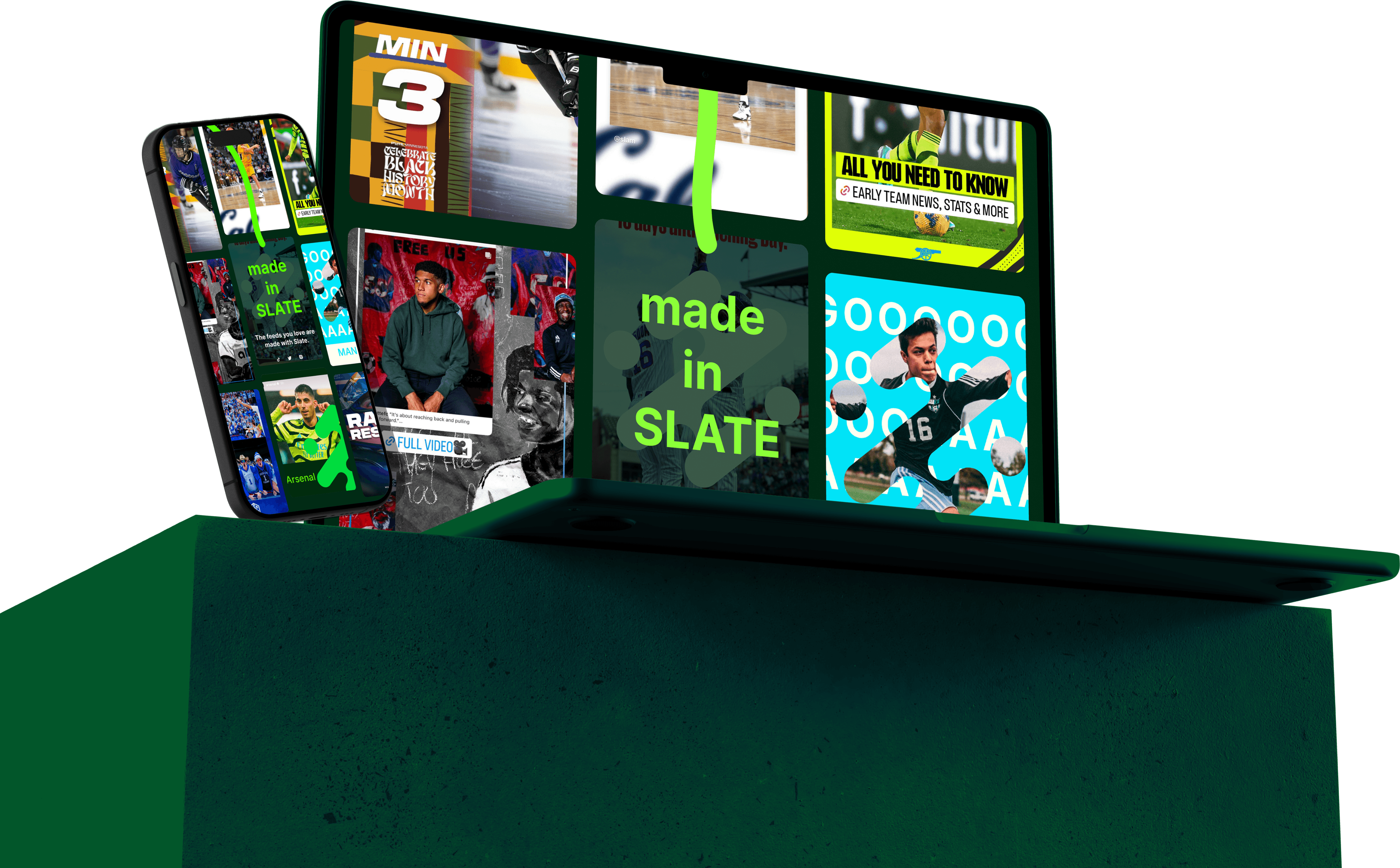
Slate gives teams pre-approved templates, fonts, and visual elements that keep everything on-brand without slowing creators down. Social teams can turn raw creator clips into polished, platform-native assets within minutes rather than days.
This speed is crucial when trends on TikTok and Reels move in hours, not weeks. A UGC unboxing video captured today can become a multi-platform asset pack—TikTok, Reels, Shorts, and paid media versions—by end of day.
By providing a shared visual language, Slate bridges internal brand teams and external creators, ensuring everyone works from the same foundation regardless of location or relationship structure.
Scaling Collaboration and Maintaining Consistency
Influencer marketing report data consistently shows that visual and messaging fragmentation undermines brand reputation and complicates measurement. When every creator asset looks different, comparing performance becomes nearly impossible.
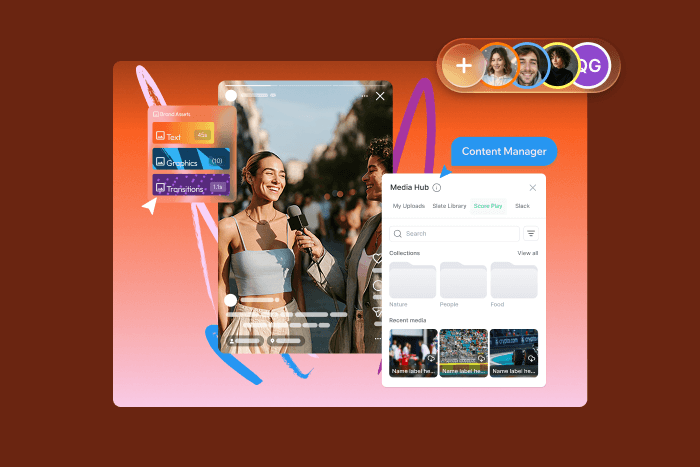
Slate acts as a hub: housing brand guidelines, asset libraries, motion packages, and content presets available to all partners. A global campaign executed through Slate maintains consistent branding across regions, creator types, and platforms.
This consistency delivers practical benefits beyond aesthetics. When content looks comparable, performance data becomes more meaningful. Teams can identify which creators, formats, and hooks actually drive results—valuable insights that inform future investment.
Future-Proofing Your Influencer Strategy
The future will continue to favor brands that are nimble, data-informed, and creator-centric. New platforms will emerge, formats will evolve, and technologies like further AI integration and Web3 experiments will create new opportunities.
What won’t change is the need for fast, on-brand content that maintains consistency across every touchpoint. This is the durable foundation that successful creator programs require regardless of platform shifts.
Slate is designed to flex with new platforms and creator workflows over the coming years—providing infrastructure that adapts as the digital age continues to reshape how brands and creators collaborate.
Moving Forward
The influencer marketing industry has matured from experimental marketing tactic to essential commercial infrastructure. Brands that recognize this shift—investing in performance measurement, authentic partnerships, and scalable creative operations—will build competitive advantages that compound over time.
Success requires treating creators as strategic partners rather than interchangeable vendors. It demands operational excellence: streamlined workflows, consistent brand systems, and measurement frameworks that prove value. And it depends on infrastructure that enables teams to move quickly as platforms evolve and new audiences emerge.
The brands that thrive will be those who build sustainable, performance-driven creator programs equipped to navigate whatever the next era of digital culture brings.
Ready to modernize your influencer marketing operations? Explore how Slate can help your team create fast, on-brand content that scales across creators, platforms, and campaigns.