Slate Team

Instagram has reached a milestone that few platforms achieve: 3 billion monthly active users as of 2026, representing over 36% of the global population actively scrolling, engaging, and discovering brands on the platform. As one of the most popular social media platforms and a leading social media network, Instagram stands out for its influence and ability to connect users and brands. Despite the meteoric rise of TikTok and emerging social networks, Instagram remains the backbone of social media marketing for businesses serious about building lasting customer relationships.
What does instagram marketing actually mean in 2026? It’s no longer just about posting pretty pictures to your instagram feed. Today’s effective instagram marketing strategy encompasses organic content across multiple formats—instagram reels, instagram stories, instagram live, and traditional instagram posts—alongside Instagram Shopping features and instagram ads that drive measurable business outcomes. Marketing on Instagram is now a strategic activity for brands, requiring a thoughtful approach to content, engagement, and leveraging platform features. The platform has evolved into a full-funnel marketing channel where awareness, consideration, and conversion happen within a single ecosystem.
The pressure on marketing teams has never been higher. Brands must publish more content, faster, and more consistently across markets and time zones. With ad revenue projected to exceed $68 billion in 2025 and advertising reach growing 13.1% year-over-year, competition for attention is fierce. Your instagram content isn’t just competing against other brands—it’s fighting for space against your audience’s group chat screenshots, pantry organization videos, and vacation Reels. As a social media site with a visual-first approach, Instagram's primary advantage is its visual nature, making it ideal for showcasing products and services that have a noticeable design or end result.
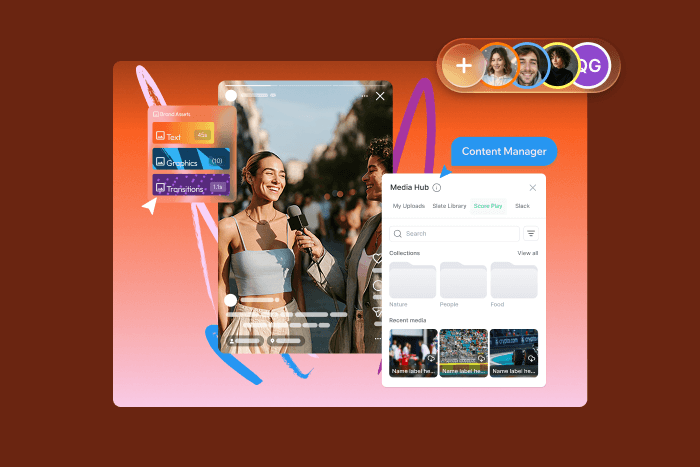
This reality demands systems and workflows that enable teams to execute at scale without sacrificing quality or burning out. That’s where tools like Slate become essential. Slate helps businesses strengthen their Instagram social media marketing by simplifying how teams create, organize, and publish branded content. Whether developing an instagram strategy, launching marketing campaigns, or exploring new instagram marketing ideas, Slate streamlines content creation and collaboration so every post stays visually consistent and on-brand.
Why Instagram Is a Cornerstone of Social Media Marketing
Instagram functions as more than a standalone social media platform—it’s a cornerstone of omnichannel marketing and modern customer journeys. Around 60% of consumers interact with brand content multiple times weekly, and 72% of Gen Z users prefer Instagram for customer care over other social media platforms. With over 200 million business profiles active, the platform has become the de facto visual storefront for brands across industries.
The visual-first format makes Instagram ideal for fashion, beauty, fitness, hospitality, SaaS brand storytelling, and events. Users naturally discover products through Explore, save posts as wishlists, and use DMs as both a customer service channel and sales channel. Instagram features like Stories and Reels help increase brand awareness and enhance a brand's visibility by positioning content prominently at the top of users' feeds and engaging followers with exclusive content. This behavior creates a seamless path from discovery to purchase that few other social media platforms can match.
Key reasons Instagram remains essential for your marketing strategy:
Product discovery happens organically through Reels, Explore, and Shopping features
Users spend an average of 1 hour and 13 minutes daily on the instagram app
Business accounts posting at least three times weekly achieve optimal instagram engagement
Carousels lead engagement metrics at 3.55% engagement versus post reach
DMs function as a direct customer inquiries and sales channel
Story Highlights serve as permanent brand navigation
While TikTok excels at short form videos and viral discovery, YouTube dominates long-form video content, and LinkedIn owns professional networking, Instagram occupies a unique middle ground. It supports both polished brand content and authentic content, making it versatile for awareness and conversion objectives. Your instagram business account needs a platform-specific strategy that leverages these distinct behaviors.
Tools like Slate streamline content creation so brands can show up consistently without overwhelming internal teams. When your social media efforts require daily output across multiple formats, having systems in place becomes non-negotiable.
Setting Up an Instagram Business Account
Establishing your brand’s presence on Instagram starts with the right foundation: a dedicated business account. Unlike personal profiles, an instagram business account unlocks powerful features designed for brands—giving you access to instagram insights, advanced contact options, and the ability to run instagram ads and shoppable posts directly from the instagram app.
Getting started is straightforward. Download the instagram app and sign up using your business email address. Once your account is created, navigate to your profile settings and switch to a business account. This step is crucial—it signals to both instagram users and the platform’s algorithm that you’re here to do business, not just share personal updates.
Choose a professional profile picture, ideally your company’s logo, to ensure instant brand recognition. Craft an instagram bio that clearly communicates your value proposition, incorporates relevant keywords, and includes a direct link to your website or a key landing page. This is your first opportunity to drive website traffic and make a strong impression on potential customers.
With your instagram business profile in place, you’ll gain access to analytics that help you fine tune your strategy, understand your instagram audience, and measure the impact of your marketing efforts. You’ll also be able to add contact buttons, making it easy for customers to reach out with inquiries or service requests—turning your instagram account into a true customer service channel.
Setting up a business account is the first step toward a successful instagram marketing strategy. It lays the groundwork for everything that follows, from content creation and campaign planning to tracking instagram marketing results and scaling your brand’s visibility across social media platforms.
Setting Clear Instagram Marketing Goals in 2026
Goals define everything: your content types, posting cadence, and resource allocation. Yet too many brands default to “grow followers” as their primary objective. This is insufficient. Your instagram marketing goals must tie directly to business outcomes that leadership cares about.
Common Instagram marketing objectives worth pursuing:
Brand awareness (measured by reach, impressions, and new followers)
Community building (measured by engagement rate, DMs, and comment quality)
Lead generation (measured by website traffic, email signups, and form completions)
Sales via Instagram Shopping (measured by product page views and attributed revenue)
Employer branding (measured by applicant source attribution)
Event promotion (measured by registrations and attendance)
To help achieve these goals, consider a few practical instagram marketing tips: use Stories and Reels to boost engagement, leverage hashtags strategically to increase discoverability, and experiment with features like shoppable posts and influencer partnerships for conversions.
Concrete goal examples with metrics:
Goal | Metric | Target | Timeline |
|---|---|---|---|
Website traffic | Link clicks from Instagram | Increase by 30% | Q4 2026 |
Lead generation | Email signups from Reels | Generate 300 signups | By July 2026 |
Community growth | Engagement rate | Maintain above 0.5% | Monthly |
Sales attribution | Instagram Shopping revenue | $50K in attributed sales | Q3 2026 |
Use the SMART framework: Specific, Measurable, Achievable, Relevant, and Time-bound. Instagram’s native instagram insights and third-party instagram analytics tools help track progress. Profile visits, website taps, Story completion rates, and Reels watch time all provide visibility into whether your content strategy is working.
Teams using Slate can map templates and content types directly to specific goals. Product posts support sales objectives. UGC templates support community building. Announcement Stories support awareness. This alignment keeps every creator focused on outcomes rather than arbitrary posting.
Defining and Prioritizing Instagram KPIs
Not every metric matters equally. Choose 3-5 primary KPIs based on your goals rather than tracking everything the instagram app offers.
KPIs mapped to objectives:
Awareness: Reach, impressions, saves, shares, follower growth
Demand generation: Profile visits, website taps, link clicks, DM conversations
Revenue: Shopping clicks, add-to-carts, purchases, discount code redemptions
Current benchmarks indicate average engagement rates around 0.48%—down 24% year-over-year due to content saturation. Post reach dropped 31% from 2024 to 2025. These numbers aren’t meant to discourage; they’re meant to calibrate expectations and emphasize quality over volume.
Create a monthly reporting ritual using a consistent template. Track the same metrics over 3-6 months to identify trends. Tag content by campaign type so you can correlate creative approaches with performance. Organizing content by campaign in tools like Slate makes this analysis faster and more accurate.
Understanding and Targeting Your Instagram Audience
Your instagram marketing strategy only works when content matches a clearly defined instagram target audience. Generic posts for everyone resonate with no one. The brands seeing results in 2026 invest heavily in understanding exactly who they’re trying to reach.
Instagram’s demographics in 2026 show a strong presence of 18-34 year olds: 31.7% are aged 18-24 and 30.6% are aged 25-34. The platform skews 56% female, enabling targeted strategies for beauty, fashion, and women’s fitness. However, adoption among 35-54 is growing significantly for finance, home, family, and B2B verticals.
Defining your persona requires answering:
Age range and life stage
Geographic location and language
Job role, income level, and purchasing authority
Core interests and hobbies
Pain points your product or service solves
What they expect from brands on social media
Methods to find and validate your instagram audience:
Hashtag research to discover where conversations happen
Competitor follower analysis to understand shared audiences
Observing how other users interact with your content and with competitors to gain insights into audience preferences and engagement patterns
Story polls and questions for direct feedback
Monitoring comments and DMs for language patterns
Social listening tools to complement native data
Example persona: Urban 28-year-old fitness enthusiast in London who discovers brands via Reels, values sustainability, and prefers brands that show behind the scenes content of product creation.
Aligning Instagram Followers with Your Overall Social Media Strategy
Your instagram followers don’t exist in isolation. They’re part of multi-platform customer journeys that might include your email list, TikTok audience, LinkedIn connections, and YouTube subscribers. Treating each channel separately creates fragmented experiences.
Cross-channel alignment best practices:
Maintain consistent visual branding (colors, fonts, logo placement) across all platforms
Adapt messaging tone appropriately while keeping core value propositions consistent
Repurpose content intelligently: long YouTube tutorial becomes a short Reel becomes a static carousel recap
Cross-promote between channels to move followers into your owned media (email)
Use consistent CTAs that reinforce the same customer journey
Slate’s shared templates and asset libraries help teams keep visual identity consistent across Instagram, TikTok, and other marketing channels. When your brand manager in London and your social team in Singapore pull from the same template library, the customer experience stays cohesive regardless of who creates the content.
Building a Cohesive, On‑Brand Instagram Presence
Recognition builds trust over time. When instagram users encounter your content in their feed, they should immediately know it’s from your brand before seeing the username. This requires systematizing your aesthetic, tone of voice, and content structure. Using a professional account is essential, as it unlocks advanced branding features like insights, contact information, and commerce tools, helping you maintain a cohesive and professional presence.
Visual elements to standardize:
Color palette (primary and secondary colors)
Typography (headline and body fonts)
Logo placement and sizing
Photo and video filters
Thumbnail styles for Reels
Graphic overlay treatments
Design trends for 2024-2026 vary by industry: muted neutrals work for wellness brands, bold neons for streetwear, clean minimalism for tech, warm earth tones for sustainable products. Choose a direction that aligns with your brand’s visibility goals and stick with it.
Content mix recommendations:
Content Type | Percentage | Purpose |
|---|---|---|
Product education | 40% | Drive consideration and sales |
Lifestyle content | 20% | Build emotional connection |
User generated content | 20% | Create social proof and community |
Behind the scenes | 10% | Humanize the brand |
Culture and FAQs | 10% | Address objections and build trust |
Document these standards in a style guide, then transform them into reusable templates inside Slate. Distributed teams—social managers, brand teams, field marketers, franchise partners—can generate platform-specific assets that stay visually aligned without requiring design review on every post.
Optimizing Your Instagram Profile for Conversion
Your instagram profile is prime real estate. Every element should work toward converting visitors into followers, and followers into customers.
Profile optimization checklist:
Username: Brand name, easy to search and remember
Name field: Include keywords relevant to what you do (searchable)
Profile image: Logo or recognizable brand mark, clear at small sizes
Category: Select the most relevant business category
Contact options: Enable email, phone, and directions as appropriate
Location: Add if you serve specific geographic areas
Craft your instagram bio with precision. You have roughly 150 characters to communicate your value proposition, establish credibility, and include a call-to-action.
Sample bios by industry:
Fitness brand: “Transform in 30 days. 10k+ 5⭐ reviews. Tap to start your journey ➡️”
SaaS company: “Helping remote teams collaborate faster. Trusted by 500+ companies. Book your demo below.”
Fashion retailer: “Sustainable style for the modern wardrobe. Free shipping over $75. New drops weekly.”
Use link-in-bio tools or native links to route website traffic to campaigns, collections, or lead magnets. Track performance with UTM parameters so you can measure which content drives clicks.
Story Highlights function as site navigation on Instagram. Create categories like “Start Here,” “Products,” “How It Works,” “Reviews,” and “FAQ.” Design consistent cover images that reinforce brand identity. Templates for these covers can be stored and reused in Slate, ensuring visual consistency even as team members rotate.
Content Strategy: What to Post on Instagram in 2026
A modern content strategy is channel-specific, data-informed, and built around campaigns rather than random posts. The days of posting whenever inspiration strikes are over. Successful instagram marketing strategy in 2026 requires planning.
Building your editorial calendar:
Map content to real dates: product launches, events, holidays, seasonal campaigns
Identify cultural moments relevant to your instagram audience (tentpole events, awareness months)
Build recurring content series for predictability: weekly tips, monthly Q&As, customer features
Leave room for agile responses when trends or news break
Balance polished feed content with spontaneous Stories and Reels
The data shows brands averaging 5 posts weekly, but engagement rates have tightened. The average engagement rate dropped to 0.48% in 2026, with Reels posting frequency up 35% while reach simultaneously declined 35%. Quality beats volume. Create content that deserves attention rather than filling a quota.
Slate simplifies working from an editorial calendar by enabling teams to store approved assets, templates, and text snippets in one place. When your product launch requires 15 pieces of content across formats, having everything organized prevents last-minute scrambles.
Leveraging Key Instagram Formats: Posts, Reels, Stories, and Live
Each format serves different purposes in your content strategy. Understanding when to use which maximizes your instagram engagement and reach.
Format breakdown:
Format | Best For | Recommended Specs |
|---|---|---|
Feed posts/carousels | Education, storytelling, product showcases | 1080×1350 portrait |
Instagram Reels | Discovery, reach, trend participation | 9:16 vertical video |
Instagram Stories | Real-time engagement, polls, behind-the-scenes content | 9:16 vertical |
Instagram Live | Deep interaction, Q&A, product launches | Real-time vertical |
Shopping posts | Direct product promotion, shoppable posts | Product tags enabled |
Content examples by format:
Reels: Tutorial showing product in action, trend participation with branded twist, customer transformation stories
Carousels: Mini case studies, step-by-step guides, myth-busting educational content
Stories: Behind the scenes content, customer photos reposts, polls and questions, limited-time offers
Live: Quarterly AMA with founders, product launch events, expert interviews
Top 25% brands see 6.5% Story tap-back rates when posting 1-7 Stories daily. This indicates genuine interest—people rewatching content because it provides value.
Format-specific templates inside Slate speed up production while keeping layouts consistent. As teams scale from weekly to daily output, templates prevent quality degradation.
Visual Consistency and Brand Templates
High-performing brands systematize their visuals. They don’t reinvent design decisions with every post. Reusable cover designs, text overlays, and layout systems create recognizable content at scale.
Benefits of template-based creation:
Faster content turnaround (minutes instead of hours)
Fewer design bottlenecks waiting on creative teams
Reduced risk of off-brand posts from regional or franchise teams
Consistent customer experience across all touchpoints
Slate allows creators to apply brand fonts, colors, and logos automatically. A field marketer in Chicago and a social manager in London can both produce on-brand instagram content without passing every asset through central creative review.
Hypothetical example: A fitness brand scaling from 4 posts weekly to daily content used Slate templates for workout tip Reels. Their production time dropped from 2 hours per post to 20 minutes, enabling their team to fine tune your strategy based on what performed rather than struggling to keep up with volume.
Execution: Posting, Scheduling, and Collaborating as a Team
Consistency and coordination become exponentially harder as more people contribute to your instagram marketing. Social teams, agencies, local teams, partners—everyone needs access to the same assets and alignment on brand standards.
Best practices for posting cadence in 2026:
Multiple Stories per week (1-7 daily for optimal performance)
Several Reels weekly for discovery and reach
Steady feed posts maintaining visual consistency
Test cadence with your specific audience rather than following rigid rules
Schedule using trusted tools—including native Meta Business Suite—to publish at optimal times based on audience behavior and time zones. Your instagram analytics will reveal when your followers are most active.
Approval workflow essentials:
Clear draft submission process
Internal review by brand manager
Compliance check for regulated industries
Final approval before scheduling
Defined escalation for time-sensitive content
Slate fits into this workflow through central asset libraries, template-based creation, role-based permissions, and streamlined export workflows. The brand manager controls templates and approved assets; content creators build within those guardrails; approvers review final output before publishing.
Streamlining Content Creation Workflows
Typical workflow mapping:
Campaign brief defines objectives and key messages
Asset creation (photography, video, graphics)
On-brand templating in Slate using approved designs
Copywriting for instagram captions
Internal review and revisions
Scheduling for optimal times
Publishing and community monitoring
Reporting and performance analysis
Common pain points without proper tools:
Lost files scattered across drives and emails
Inconsistent designs when multiple people create content
Missed deadlines from unclear approval processes
Duplicate work when teams don’t share assets
Define clear roles: strategist, designer, copywriter, approver, community manager. Document responsibilities so everyone knows their lane.
Slate proves particularly valuable for real-time content—events, sports activations, live moments. When you need to produce polished posts in minutes rather than days, having templates ready and assets organized makes the difference between capturing the moment and missing it entirely.
Example: A retail brand covering a product launch day used Slate templates to create 12 pieces of content across Stories, Reels, and feed posts within 4 hours. Their design team pre-loaded templates; the on-site social manager simply swapped images and adjusted copy in real-time.
Growing and Engaging Your Instagram Community
Follower count matters far less than engagement quality and community strength. A creator account with 5,000 highly engaged followers outperforms an instagram account with 50,000 passive followers for most business objectives.
Organic growth tactics:
Cross-promote on other social media platforms and email
Optimize bio and name field with searchable keywords
Use Reels strategically for discovery and new followers
Collaborate with creators whose audiences overlap yours
Participate authentically in relevant conversations
Engagement fundamentals:
Reply to comments and DMs quickly (within hours, not days)
Use interactive stickers in Stories: polls, questions, sliders
Ask genuine questions in instagram captions that invite responses
Feature customer photos and user generated content regularly
Leverage instagram hashtag strategies for discoverability
User generated content builds trust more effectively than polished brand content. When potential customers see real people using and enjoying your products, it reduces purchase anxiety. Feature customer photos, testimonials, and reviews prominently.
Having consistent, high-quality visual templates makes it easy to turn UGC into polished posts at scale. When someone tags your brand, you can quickly transform their content into a branded Story or feed post using Slate templates—acknowledging them while maintaining visual consistency.
Influencers, Creators, and Brand Collaborations
The landscape has shifted. Nano-influencers (1,000-5,000 followers) now boast 5.6% engagement rates—far exceeding accounts with massive followings. Micro-influencers offer hyper-engaged niche audiences. Authenticity trumps reach for most marketing campaigns.
Choosing the right partners:
Audience fit: Do their followers match your target audience?
Engagement quality: Are comments genuine or bot-generated?
Content style: Does their aesthetic align with your brand?
Values alignment: Do they represent what your brand stands for?
Simple collaboration formats:
Joint Reels featuring your product in their content style
Story takeovers giving creators control of your account
Co-created templates they can use and share
Affiliate campaigns with trackable links or discount codes
Track results over 30-90 days using reach, engagement, website traffic, and code redemptions. This timeframe provides enough data to evaluate true impact beyond initial post performance.
Supply on-brand visual assets or Slate templates to collaborators. This ensures campaigns feel cohesive while allowing creators to maintain their authentic voice. Influencer marketing works best when both parties benefit: you get authentic content; they get resources that make their job easier.
Paid Instagram Marketing: Ads, Shopping, and Conversion
Paid and organic instagram marketing reinforce each other. Your organic content tests messages and creative approaches; paid amplifies what works. Your instagram ads introduce your brand to cold audiences; organic nurtures them into customers.
Main ad formats:
Format | Best For | Typical CPC |
|---|---|---|
Feed ads | Awareness and consideration | $0.20-2.00 |
Story ads | Immediate action, swipe-ups | $0.20-2.00 |
Reels ads | Video engagement, discovery | $0.20-2.00 |
Shopping ads | Direct product sales | $0.20-2.00 |
Branded content ads | Influencer amplification | Varies |
Instagram Shopping optimization:
Enable product tags in posts and Stories
Create collections that support browsing behavior
Optimize product detail pages with strong images and descriptions
Use shoppable posts for organic reach alongside paid promotion
Start with small test budgets—a few hundred dollars over 2-4 weeks. Test creative variations, audience segments, and placements. Optimize based on results before scaling spend.
Conversion rates typically range 1-2% for instagram ads. Connect your ad strategy directly to landing page and funnel outcomes. An ad that drives cheap clicks but no conversions wastes budget.
Having a library of on-brand ad-ready assets maintained in Slate makes A/B testing faster and more affordable. When you can spin up creative variations in minutes, you test more and learn faster.
Creative Best Practices for High‑Performing Instagram Ads
Creative principles for video ads and static ads:
Clear focal point that communicates the product/message
Text legible on mobile (most viewing happens on phones)
Strong CTA that tells viewers exactly what to do
Style alignment with organic content so ads feel native to feeds
Testing priorities:
Thumbnails (especially for video content—first impression matters)
Hooks (first 1-3 seconds determine whether viewers watch)
Headlines and copy approaches
Call-to-action variations
Fast production cycles are critical. Trends change, offers expire, messages evolve. Marketing teams need to refresh ads every few weeks to prevent fatigue and capitalize on what’s working.
Slate’s templates and brand controls help teams turn organic post concepts into ad variations quickly. Your winning Reel can become an ad creative within hours, maintaining brand consistency while accelerating time-to-market.
Measuring, Optimizing, and Scaling Your Instagram Strategy
Ongoing measurement and experimentation separate brands that grow from brands that plateau. Your instagram marketing results should improve over time as you learn what resonates with your instagram audience.
Metrics review cadence:
Frequency | Metrics to Review |
|---|---|
Weekly | Reach, engagement rate, Story completion |
Monthly | Follower quality, click-throughs, conversions |
Quarterly | Revenue attribution, audience growth trends, competitive benchmarks |
Running content experiments:
Test different hooks in Reels (question vs. statement vs. visual)
Compare posting times to identify optimal windows
A/B test carousel formats (educational vs. storytelling)
Track theme performance (product vs. lifestyle vs. UGC)
Run experiments for at least 4-6 weeks before drawing conclusions. Single-post performance can be misleading; patterns emerge over time.
Content tagging by campaign, format, and theme makes analysis actionable. When you know which templates drive engagement and which themes generate clicks, you can double down on what works. Teams using Slate can organize content by these dimensions, making correlation between creative approaches and performance data straightforward.
Turning Insights into Scalable Systems
Don’t just learn systematize. When you identify winning concepts, transform them into reusable templates, recurring series, and documented playbooks.
Building your internal playbook:
Document proven hooks and their performance data
Capture visual treatments that drive engagement
Record CTAs that generate clicks and conversions
Note timing patterns for optimal posting
Archive successful campaign structures
This playbook becomes your competitive advantage. New team members ramp faster. Agency partners understand your standards. Franchise teams produce on-brand content without constant oversight.
Slate serves as the operational layer for that playbook. Best practices embed directly into the content creation environment through templates and brand controls. Your winning Q4 sale announcement format becomes a template for Q4 2026. Your high-performing product tutorial Reel structure becomes the starting point for all product tutorials.
Example: A retailer analyzed their Q4 2025 performance and identified that countdown Stories with specific visual treatments drove 3x more website traffic than other formats. They standardized this into a Slate template. Q1 2026 sale announcements used the same structure and maintained performance without requiring the original team member who discovered it.
Conclusion: Confident Instagram and Social Media Marketing with Slate
Instagram remains central to social media marketing in 2026. With 3 billion users, robust business features, and behavior patterns that support discovery through conversion, the platform deserves serious investment. But investment means more than budget—it means systems, workflows, and collaboration that enable consistent excellence.
Successful instagram marketing is both creative and operational. The brands winning attention have clear goals tied to business outcomes, deep understanding of their target audience, consistent brand presence across formats, and iterative optimization based on performance data. They don’t post randomly and hope for results. They build machines that produce quality content at scale.
Slate simplifies the operational side of this equation. As a powerful instagram marketing tool, it enables teams to create, organize, and publish on-brand content efficiently. Whether you’re launching marketing campaigns, exploring new content formats, or scaling output across markets, Slate provides the templates, asset libraries, and collaboration workflows that make consistent execution possible.
Audit your current instagram business profile and content processes. Identify where inconsistency creeps in, where bottlenecks slow production, and where quality suffers from speed demands. These friction points are opportunities for improvement.
Ready to see how Slate can support your 2026 Instagram strategy? Visit www.slateteams.com to explore how teams like yours are scaling their instagram presence with confidence.
Frequently Asked Questions
What is Instagram marketing in 2026?
Instagram marketing in 2026 is the strategic use of content, ads, Shopping features, and messaging tools to drive awareness, engagement, and sales within one platform. It includes Reels, Stories, Lives, carousels, and paid campaigns working together as a full-funnel marketing system.
Why is Instagram important for social media marketing?
Instagram is important because it combines discovery, engagement, and conversion in one ecosystem. With billions of active users and strong visual storytelling capabilities, it allows brands to build relationships, showcase products, and drive measurable business results.
How do I set up an Instagram business account?
To set up an Instagram business account, create a profile, switch to a business account in settings, upload a recognizable logo, write a keyword-rich bio, and add contact details and a website link. This unlocks analytics, ads, and shopping features for marketing.
What are the main goals of Instagram marketing?
The main goals of Instagram marketing include increasing brand awareness, building community engagement, generating leads, driving website traffic, and boosting sales through Shopping and ads. Each goal should be tied to clear, measurable business outcomes.
What KPIs should brands track on Instagram?
Brands should track reach, impressions, engagement rate, profile visits, link clicks, conversions, and revenue. Additional signals like saves, shares, and DM conversations help measure content quality and audience intent.
How do you create an effective Instagram marketing strategy?
An effective Instagram marketing strategy starts with clear goals, audience research, defined content pillars, and a consistent posting schedule. It also includes testing content formats, analyzing performance, and optimizing based on data over time.
What type of content works best on Instagram in 2026?
The best-performing content in 2026 includes Reels for discovery, carousels for education, Stories for interaction, and user-generated content for trust. Content that is authentic, visually consistent, and audience-focused performs best.
How often should brands post on Instagram?
Brands should post consistently based on their capacity and audience behavior. A strong baseline includes several feed posts per week, regular Reels, and daily Stories, with quality prioritized over quantity.
How can brands grow their Instagram audience organically?
Brands grow organically by posting valuable content, using Reels for discovery, engaging with comments and DMs, collaborating with creators, and leveraging hashtags and trends. Consistent interaction and relevance drive sustainable growth.
What role do Reels and Stories play in Instagram marketing?
Reels drive reach and discovery by exposing content to new audiences, while Stories build engagement and relationships through interactive features. Together, they support both top-of-funnel awareness and ongoing audience connection.
Are Instagram ads still effective in 2026?
Yes, Instagram ads remain effective when paired with strong creative, clear targeting, and optimized landing pages. Ads work best when they align with organic content style and are continuously tested and refined.
How can brands manage Instagram marketing at scale?
Brands manage Instagram marketing at scale by using templates, shared asset libraries, structured workflows, and scheduling tools. Platforms like Slate help teams maintain consistency, speed up production, and collaborate efficiently across markets.