Slate Team

Your brand can post the perfect meme on TikTok and send a heartfelt apology email the same afternoon—but if both messages feel like they came from the same company, you’ve nailed your brand tone. The concept of brand tone of voice is crucial here, as it defines how your brand communicates consistently across all channels and shapes how customers perceive your identity. In 2026, where social media posts fly across Instagram, LinkedIn, and TikTok simultaneously, understanding and controlling your tone of voice is what separates brands that connect from brands that confuse. This guide breaks down everything modern social teams need to know about defining, applying, and maintaining brand tone across every channel.
Key Takeaways
Brand tone is the emotional inflection layered onto your brand’s communications in specific contexts—playful in a launch post, empathetic in a support reply—while brand voice is the stable personality underneath that never changes, to ensure your brand's communications are impactful and consistent.
In 2026, consistent messaging builds recognition and trust across platforms; the Edelman Trust Barometer reports 81% of consumers need to trust a brand before purchasing, with consistent communication cited as a top factor.
Tone shifts daily between TikTok trends, LinkedIn thought leadership, and customer DMs, but the underlying brand personality should remain consistent so your audience always knows it’s you.
Tools like Slate help teams centralize brand guidelines, tone presets, and templates so every post—whether drafted in Sydney or San Francisco—starts from the right baseline, helping teams maintain consistency across all channels.
Getting tone right boosts engagement, builds customer loyalty, and protects your reputation when things go wrong.
What Is Brand Tone? (Answered Fast)
Brand tone is how your brand sounds emotionally in a specific message. It’s the mood you bring to each piece of content—playful in a product teaser, urgent in a flash sale announcement, empathetic in a service outage update.
Here’s a quick example. Same brand, same news, two tones:
Playful tone (TikTok launch): “Whoa, check this feature that’s about to save your Tuesday standup! 🚀 Big drop incoming.”
Serious tone (outage email): “We know how frustrating this morning’s outage was for your workflow. We’re genuinely sorry—here’s what happened and what we’re doing to prevent it.”
The distinction is simple: brand voice is the “character” your brand conveys consistently, while brand tone is the “mood” that changes with context. On social media in 2026, your tone shifts hourly between trend-driven audience content, professional updates, and customer support replies—but it should always feel like the same brand.
Finding the perfect tone means selecting the right emotional inflection for each situation, rather than striving for a one-size-fits-all approach.
Common tone modes include:
Bold: Confident, direct, makes a statement
Reassuring: Calm, supportive, solution-focused
Celebratory: Excited, energetic, share-worthy
Apologetic: Humble, empathetic, action-oriented
Conversational: Casual, friendly, approachable
Brand Voice vs. Brand Tone
Think of brand voice as your company’s distinct personality—the core characteristics that define how your brand communicates everywhere, always. Brand tone is the emotional adjustment you make depending on the situation, channel, and audience.
Voice equals “always curious and friendly.” Tone equals “excited in launch posts, calm in FAQs, empathetic in issue updates.”
Consider a SaaS company with a helpful, innovative voice. On TikTok, their tone might be trend-aware and playful: “POV: You just discovered the shortcut that saves 3 hours a week.” In a service outage email, the same brand shifts to direct empathy: “We’re fixing this now—expect an update in 30 minutes.” On their careers page, the tone becomes thoughtful and inspiring: “Join a team shaping the future of work.” The unique brand voice stays consistent; the tone flexes.
Many brands struggle because teams confuse these concepts. The result? Either robotic sameness (ignoring context entirely) or chaotic inconsistency (sounding like different companies on different channels). Both erode brand recognition.
Slate helps separate these in practice by letting teams store voice guidelines as always-on foundations and tone presets per campaign or channel inside one shared workspace.
Why Brand Tone Matters in 2026
The 2026 landscape is dominated by short-form video, fleeting trends, and audiences who expect human, empathetic communication. TikTok and Reels now account for over 60% of social engagement, and attention spans are measured in seconds. Your brand conveys its personality—or fails to—in the first few words of every caption.
The stakes are high. According to the Edelman Trust Barometer 2025, 81% of consumers need to trust a brand before making a purchase, up from 73% in 2023. Consistent tone is cited as a key factor in building that brand trust.
Here’s where tone matters most:
Crisis communication: An empathetic tone de-escalates frustrated customers. Flippant responses go viral for the wrong reasons—see the 2024 United Airlines backlash when a jokey reply to flight delays sparked #BoycottUnited.
Product launches: Excited, bold tone generates buzz and shareability. This is where brands stand out from other brands playing it safe.
Community building: Inclusive, warm tone fosters engagement and turns followers into advocates.
Customer support: Reassuring, solution-focused tone directly impacts retention. Zendesk data shows empathetic tone in support boosts NPS by 20-30%.
Mismatched tone—like a sarcastic reply to a genuine complaint—can damage reputation in hours across different channels.
A consistent and well-defined brand voice matter because it builds trust, familiarity, and recognition with your audience. When your brand voice is clear and reliable, it enhances engagement, differentiates your brand, and is crucial for effective content creation and messaging strategies.
Core Elements of Brand Tone
Brand tone is made up of several specific, controllable elements that writers and creators can be trained on. Think of these as the key elements of brand tone—dials you can adjust per context while keeping your brand messaging intact.
Formality level: Ranges from highly professional (“We are pleased to announce…”) to very casual (“Huge news, friends!”). Your communication style should match what your target audience expects.
Emotional intensity: Calm and neutral for support documentation, excited and urgent for limited-time offers. Adjust based on what the moment demands.
Positivity vs. realism: Some brands stay optimistic in every post; others take a matter-of-fact approach. Both work—consistency matters more than which you choose.
Humor and playfulness: None, light, or bold. A tech brand might use dry wit; a children’s brand leans into full playfulness. Define boundaries so your marketing team stays on brand.
Inclusivity and empathy: How you acknowledge different experiences. This is especially critical in support contexts and when addressing diverse audiences.
Before-and-after example:
Neutral: “Service delayed.”
Empathetic: “Sorry for the hold-up—we’re on it and truly value your patience.”
Same meaning, completely different emotional connection. Your brand voice guidelines should capture these elements clearly so creators can intentionally dial each up or down.
Slate operationalizes these elements by baking them into content templates and caption presets used across Instagram, TikTok, and other channels.
Real-World Brand Tone Examples
Here are a few examples of how leading brands use tone to express their personality.
Let’s look at how well-known brands apply tone in practice. These voice examples show how brand personality comes through consistently while tone adapts.
Slack builds on a “humans speaking to humans” voice with a conversational tone that’s friendly and casual. In notifications, they’re playful (“Ding! New message waiting”). In error messages, they’re empathetic (“Oops, something went wrong. Let’s fix that together”). The brand connect with users happens because the tone never feels corporate, even when things break.
Nike maintains a bold, enthusiastic tone across platforms. On TikTok, it’s high-energy motivation: “Just Do It—sweat now, shine later.” On LinkedIn, the same personality defines itself through value-driven professionalism: “Empowering athletes at every level, everywhere.” Low formality, high intensity—it works because Nike’s brand values center on action and aspiration.
Wendy’s has become famous for high-humor, bold tone on X/Twitter, regularly roasting competitors (“Our fries > yours”). But when customers complain, the tone shifts to empathetic directness: “DM us—we want to make this right.” This flex between different tones keeps the same underlying wit while adapting to context. Sales rose 15% post-viral roasts, proving personality pays.
Patagonia leans into an eco-conscious, warm tone. Climate campaigns use urgent empathy: “This is our planet—act now.” Community posts feel inclusive: “Join fellow adventurers making a difference.” Their brand’s core values around sustainability guide every tonal choice.
Each brand maintains a well defined brand voice while flexing tone for platform and purpose.
How To Define Your Brand Tone
Defining your brand tone is a practical process any social or marketing team can complete in a week or two. Here’s how to do it.
Step 1: Audit your current voice. Review existing content across all communication channels—social media posts, emails, in-app messages, support replies. Look for patterns and inconsistencies. Where does your brand sound like itself? Where does it feel off brand? As you audit, ask a few questions to analyze competitors' communication styles and define your own approach.
Step 2: Clarify mission, values, and audience expectations. In 2026, audiences (especially trend driven audiences) crave authenticity and human empathy. Document your brand’s core values and how your target audience expects you to sound. Competitor analysis helps identify gaps you can own.
Step 3: Describe your brand as a person. Choose 3-5 personality traits that define how your brand communicates. Map these to tone traits. For example: “Helpful, curious, lightly playful” translates to clear explanations, genuine interest in user problems, and occasional wit.
Step 4: Define what you’re not. Equally important: what tones are off-limits? “Never sarcastic toward customers. Never flippant about safety. Never condescending.” These guardrails protect your brand identity.
Step 5: Create a tone framework. Document 3-4 primary tone modes your brand uses most often. Example:
Tone Mode | Description | Sample Caption |
|---|---|---|
Helpful | Clear, solution-focused | “Quick fix inside—try this tweak and you’re good to go.” |
Lightly Playful | Warm, a touch of wit | “Plot twist: this feature actually works. 😏” |
Direct | Confident, efficient | “Results: 2x faster workflows. Here’s how.” |
Step 6: Document examples. Create on-brand vs. off-brand examples so everyone on the same page understands what “on-tone” looks like. Run workshops using actual posts and DMs to align internal teams. These examples help guide the creation of the brand's content across platforms, ensuring consistency and reinforcing your brand identity.
Once defined, centralize your tone framework in a tool like Slate—not scattered across Google Docs nobody can find.
Creating a Brand Voice Chart
A brand voice chart is an absolute game-changer for any team aiming to maintain exceptional brand consistency across all communication channels. Picture this: a dynamic visual powerhouse that showcases your brand's core values, personality traits, and preferred communication style—all strategically organized in one invaluable resource. This chart serves as your ultimate quick-reference arsenal for anyone creating content, ensuring that every message, whether it's an engaging tweet or a compelling press release, reflects the same distinctive tone of voice and brand personality that sets you apart.
What makes a standout brand voice chart truly revolutionary? It features dedicated columns for your brand's core values (like innovation or inclusivity), the powerful personality traits you want to convey (such as friendly, bold, or trustworthy), and specific guidance on language and tone to maximize impact or avoid completely. For example, you might strategically note that your brand voice should always be "optimistic and clear," and never "sarcastic or overly formal." Including real voice examples—both exceptional "on-brand" and cautionary "off-brand" samples—helps internal teams instantly understand what a well defined brand voice looks and sounds like in practice, streamlining their creative process.
By centralizing this essential information, a brand voice chart empowers your team to stay perfectly aligned, no matter who's writing or which platform they're leveraging. This consistency is absolutely crucial for building robust brand recognition and unshakeable trust with your target audience. When your brand's tone of voice remains steady and reliable, your audience knows exactly what to expect, making your brand significantly more memorable and relatable. In essence, a brand voice chart is the backbone that drives consistent tone and creates a strong, unified brand voice that truly resonates.
Brand Messaging and Core Values
What makes a brand voice truly powerful and irresistible? It's the game-changing combination of crystal-clear brand messaging and rock-solid core values that form the ultimate foundation. These essential powerhouse elements don't just define what your brand communicates—they revolutionize how it communicates, transforming your entire communication style and ensuring your voice connects with your target audience like never before. Core values such as innovation, sustainability, or customer-first thinking become the ultimate compass for your brand's messaging, masterfully guiding the tone, language, and personality that elevates every single interaction to new heights.
Here's what's truly remarkable: when your brand messaging is anchored in authentic core values, your communication becomes genuinely magnetic and incredibly relatable. This authenticity is exactly what creates that emotional spark between your brand voice and your audience, building unshakeable brand loyalty and passionate advocacy that grows stronger over time. Whether you're launching an exciting new product or responding to valuable customer feedback, a consistently powerful brand voice—firmly rooted in your core values—guarantees your message stays crystal clear and completely trustworthy across every channel and platform.
The secret to maintaining this incredible momentum? Regularly revisiting your brand's core values and perfectly aligning your messaging to match them strengthens and reinforces what your brand truly stands for. This strategic approach not only keeps your brand voice remarkably consistent, but also deepens that emotional connection that transforms casual followers into devoted, loyal fans who can't wait to champion your brand.
The Role of Brand Strategy
A game-changing brand strategy is the ultimate foundation for developing an exceptional brand voice that truly stands out in today's crowded marketplace! Your brand strategy goes far beyond simple logos and taglines—it powerfully defines your brand's mission, vision, and unique personality, setting the strategic direction for exactly how your brand communicates with its target audience. By clearly articulating your brand's ambitious goals and competitive positioning, you create an invaluable blueprint for a consistent brand voice that seamlessly supports your overall brand identity and elevates your market presence.
When your brand strategy is perfectly aligned with your communication style and tone, every single piece of content—whether it's an engaging social media post or a personalized customer email—reinforces your brand's distinctive personality and strengthens your connection with your audience. This strategic alignment is absolutely crucial for building powerful brand recognition and unwavering trust, as your audience comes to associate your brand with a distinct, memorable voice that resonates deeply with them. A consistent brand voice, guided by a robust brand strategy, helps you dramatically differentiate your brand from competitors and ensures your messaging remains authentically on brand across all channels and touchpoints, maximizing your impact and engagement.
Ultimately, a well-defined brand strategy empowers your entire team to create compelling content that not only resonates powerfully with your target audience but also supports your brand's long-term vision and accelerates sustainable growth. With the right brand strategy in place, you'll unlock incredible opportunities to connect, engage, and elevate your brand to new heights of success and recognition.
Applying Brand Tone Across Social Media Platforms
Your brand’s unique personality should remain consistent across platforms, but tone expression must adapt to each platform’s culture and format.
Instagram is visual-first. Captions should be concise, emotionally expressive, and designed to complement imagery. Lean into your brand’s warmth or boldness in short bursts.
TikTok rewards trend-aware, conversational content. Experiment within your tone boundaries—but never chase a trend so hard you sound like a different brand. The right tone here often means higher energy and quicker delivery.
X/Twitter favors succinct, reactive posts. If your brand uses humor, establish clear rules for hot takes. Wit works; mean-spirited doesn’t.
LinkedIn calls for professional, value-driven content that’s slightly more formal while still human. Share insights, not just announcements.
DMs and support replies require high empathy, clarity, and de-escalation skills. This is where your empathetic tone matters most for customer experience.
Scenario: Product delay announcement
Instagram: “Heads up—shipping’s playing catch-up. Your order’s worth the wait! 📦❤️”
LinkedIn: “Update: A brief shipping delay ensures the quality you expect. New ETA: [date]. Thank you for your patience.”
Same message, different tones for different audiences. Slate keeps brand assets, tone notes, and templates in one place so every post starts from the right baseline—critical when multiple teammates publish across time zones.
Building Brand Loyalty
Brand loyalty doesn't just happen by accident—it's revolutionized through an absolutely game-changing brand voice that truly elevates your connection with your target audience! When your brand consistently delivers the same tone, language, and personality traits across every single channel, you're creating something extraordinary: that sense of familiarity and trust that transforms casual customers into passionate advocates. A powerfully crafted brand voice doesn't just help your audience feel understood and valued—it forges an emotional connection that goes far beyond simple transactions and into the realm of genuine brand devotion.
Here's where consistency becomes your secret weapon: when your audience encounters that same distinctive tone of voice across your social media posts, emails, and customer support interactions, you're reinforcing your brand's reliability and credibility in ways that truly matter. This consistent approach doesn't just help your brand stand out from competitors—it makes your messaging incredibly memorable and impactful, creating lasting impressions that drive real results. Over time, this strategic approach revolutionizes customer loyalty, transforming satisfied buyers into passionate brand evangelists who can't stop talking about what you offer.
By investing in a strong, consistent brand voice, you're laying the groundwork for truly lasting relationships and exceptional long-term business success that extends far beyond your expectations. Remember, a well-crafted brand voice is your ultimate tool for transforming one-time customers into lifelong fans who become your most valuable marketing assets. That's exactly what smart brands understand—and that's what will elevate your business to new heights!
Measuring Brand Trust
Want to unlock the true power of your brand voice? Understanding how your brand voice is perceived is absolutely crucial for building and maintaining exceptional brand trust! Measuring brand trust involves tracking game-changing indicators like customer loyalty, retention rates, and advocacy, as well as monitoring those invaluable social media conversations and online reviews. These powerful metrics provide you with essential insights into whether your communication style and tone of voice are truly resonating with your target audience and creating that magic connection you're after.
Ready to ensure your brand voice remains consistently effective and impactful? You'll want to leverage brand voice guidelines and tone of voice charts as your essential benchmarks for all your content creation. Make it a priority to regularly review feedback and performance data to identify those golden opportunities where your brand's communication style may need fine-tuning. For instance, if sentiment analysis reveals a dip in positive mentions, that's your cue to revisit your voice guidelines or provide additional training to elevate your team's performance to the next level.
Here's the game-changer: a strong brand voice is an incredibly powerful driver of brand trust, as it signals authenticity and reliability to your audience in ways that truly matter. By consistently measuring and refining your brand voice, you can dramatically strengthen customer loyalty and ensure your brand remains credible and trustworthy across every single channel and touchpoint. The sky's the limit when you master this essential strategy for brand success!
Maintaining a Consistent Brand Tone at Scale
Defining tone once isn’t enough. The real challenge is staying consistent as teams, channels, and campaigns multiply.
Build a living style guide. Your brand voice guidelines should include clear do/don’t examples and evolve as your brand grows. Review quarterly to spot drift.
Run regular content reviews. Monthly or quarterly audits help identify where tone has wandered. Use these to retrain teams and update documentation.
Train everyone. New hires, agencies, and freelancers need annotated real examples from your feeds—not just abstract principles. Show them what voice consistency looks like in practice.
Centralize with tools. Slate stores brand guidelines, approved phrases, and tone notes next to editable templates so creators don’t hunt through scattered PDFs. Templates pre-loaded with tone cues reduce the chance of off brand posts.
AI and automation can help with caption suggestions and on-brand presets—but only when guided by your clearly defined tone rules. Document exceptions (like crisis communication mode) so your team knows when and how tone should intentionally shift.
How Slate Helps Teams Keep Brand Tone On-Point
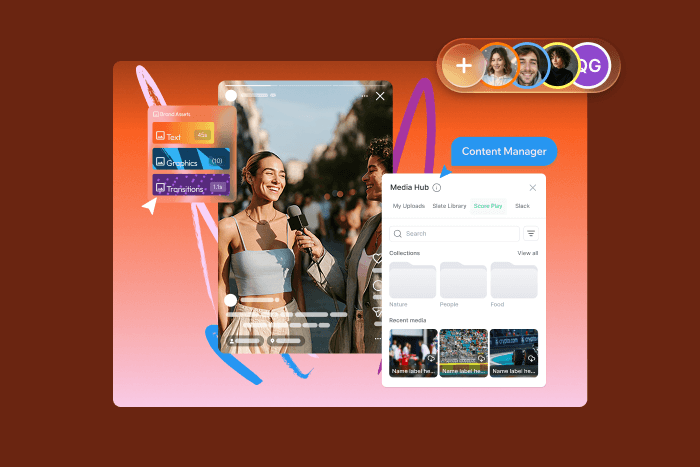
Slate serves as a central hub for brand-consistent social content, designed for modern marketing teams juggling multiple platforms and collaborators.
Teams upload brand guidelines—tone, voice, visual rules—into Slate so every creator works from the same source of truth. No more guessing what “on-brand” means or digging through outdated documents.
Slate’s templates let teams pre-bake tone cues into overlays, lower-thirds, and caption frameworks for Instagram Reels, TikTok, Stories, and more. When creators start from branded templates, creative expression stays within brand boundaries.
Collaboration features mean multiple creators and approvers work in one workspace. Approvals and workflows prevent off-tone posts from slipping through, even when publishing 24/7 across markets.
For global or distributed teams, Slate ensures a unified brand tone regardless of time zone or language—everyone stays on the same page.
FAQ: Brand Tone in Practice
How often should we review or update our brand tone?
Core brand tone shouldn’t change every quarter—stability builds recognition. However, a light review every 6-12 months keeps things fresh. Tie reviews to major events: rebrands, new product lines, market expansions, or major platform shifts. Minor adjustments based on audience feedback and performance metrics are healthy, but the underlying brand personality should remain consistent. Slate makes updates easier by letting teams adjust templates and guidelines in one place.
Can one brand have more than one tone?
Yes—and it’s completely normal. Brands typically have one consistent brand voice but several recurring tone modes: “launch tone” (excited, bold), “support tone” (empathetic, clear), “community tone” (warm, inclusive). The key is that all modes still feel like the same brand person. Document 3-4 primary tone modes with examples so teams know when to use each. Slate supports this by letting teams create separate template sets for different tones and campaigns.
How do we know if our brand tone is actually working?
Track both quantitative metrics (engagement rate, saves, shares, sentiment scores) and qualitative signals (comments describing your brand as “helpful,” “fun,” or “refreshing”). Run occasional A/B tests where copy differs primarily in tone to see which style resonates. Use social listening to monitor how people describe your brand unprompted. Slate lets you create and test tone variations while staying on brand visually, streamlining experimentation.
What if different stakeholders disagree about our brand tone?
Run a structured workshop using real examples—current posts, competitor posts—to discuss, tag, and agree on desired tone traits. Appoint a small “brand council” (marketing lead, social lead, CX rep) to make final decisions and maintain the brand voice chart. Ultimately, audience expectations and response should be the tie-breaker, not internal preference. Housing final guidelines in Slate ends debates by pointing everyone to one approved source of truth.
How does brand tone work when we post in multiple languages?
Tone should be translated conceptually, not word-for-word. Define tone traits in plain language (“optimistic, clear, never sarcastic”) and have native speakers adapt examples to fit cultural context. Coordinate through a central hub like Slate where master templates and tone notes live; local teams customize for language and region. Periodic cross-market reviews ensure each version still feels like the same brand globally while respecting local communication norms.
Defining your brand tone transforms scattered content into a clear brand identity your audience recognizes across every platform. Start by auditing your current voice, documenting your personality traits, and centralizing everything in a tool built for modern social teams.Ready to keep your brand tone consistent across Instagram, TikTok, LinkedIn, and beyond? Explore how Slate helps teams create content that sounds like you—every single time.