Slate Team

Key Takeaways
Social media advertising effectiveness in 2024–2026 is driven by precise targeting, strong creatives, and accurate measurement. Social media advertising has emerged as an extremely effective marketing strategy. Global social ad spend is projected to reach $317.3 billion by 2026, with over 82.9% occurring on mobile devices.
Well-executed social media campaigns often deliver engagement rates up to three times higher than traditional online ads. However, performance varies significantly based on strategy, creative quality, and platform selection.
Social media ads are most effective as a full-funnel engine—valuable for building demand, nurturing it, and converting it into measurable ROI—rather than isolated traffic drivers. Average ROI across platforms reaches $5.20 for every $1 spent.
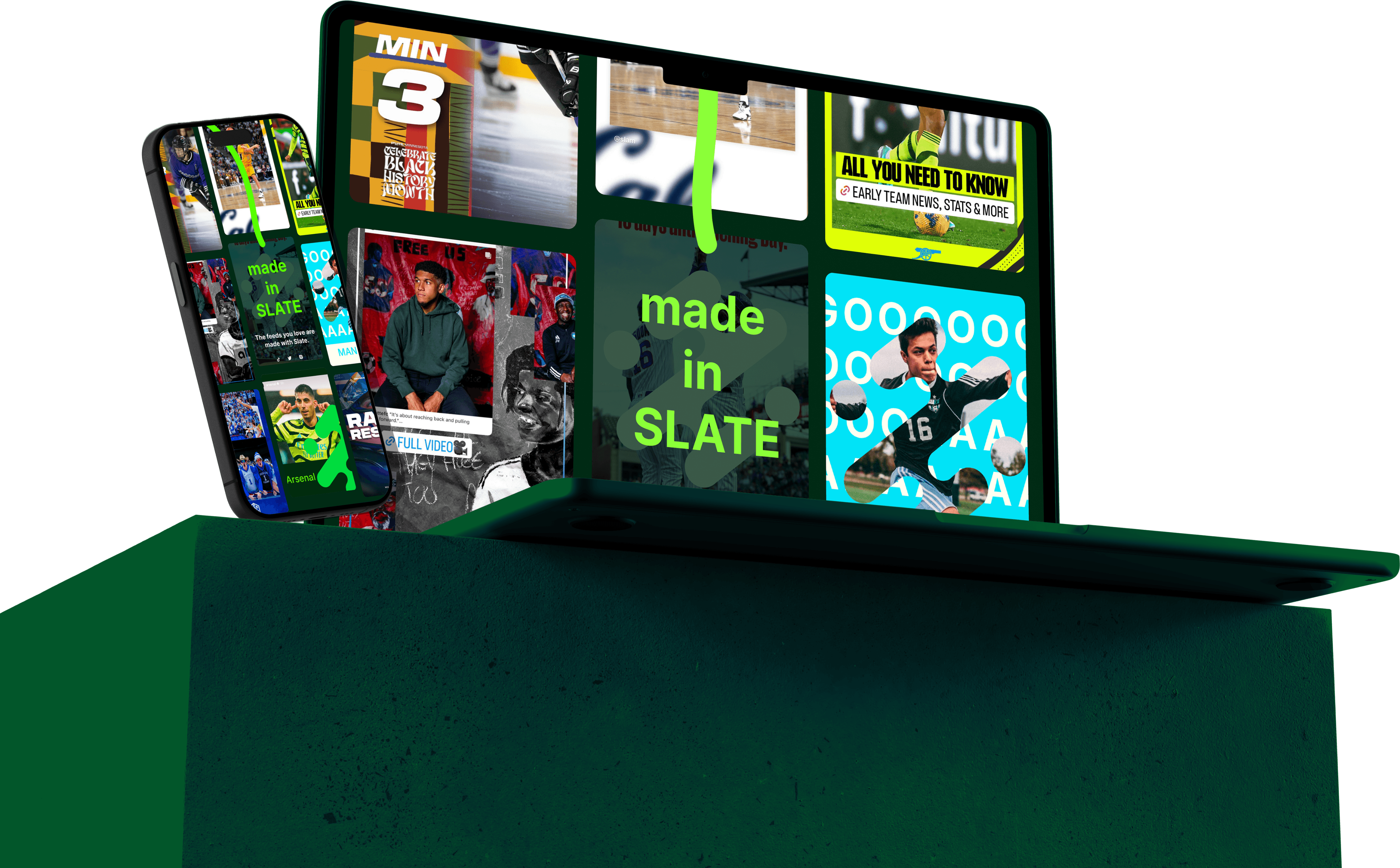
On-brand, visually consistent content significantly improves click through rate and conversion rates. Tools like Slate help teams produce this kind of creative at scale while maintaining brand consistency.
A comprehensive social media strategy is essential as a foundation for effective advertising campaigns, ensuring alignment with broader marketing objectives and maximizing ROI. This blog post covers targeting, costs, platforms, metrics, ROI, creative best practices, and FAQs with concrete guidance for marketers running ads across social channels.
Introduction: Why Social Media Advertising Is So Effective Today
Social media platforms like Facebook, Instagram, TikTok, LinkedIn, and X (formerly Twitter) collectively host over 4.8 billion monthly active users worldwide. Social media users represent a vast and diverse audience, allowing advertisers to target specific individuals based on their habits and preferences. This massive scale means social media advertising now captures $3 of every $10 in digital advertising spend, with budgets growing at 10.90% annually through 2030.
The average American spends two hours and 15 minutes every day on social media, highlighting a significant opportunity for engagement.
The numbers tell a compelling story: social media ad spend overtook print in 2019, and TikTok, Instagram, and YouTube now account for over 60% of product discovery ahead of search engines like Google.
Effectiveness stems from three core pillars:
Scale: Reach billions of potential customers across different platforms
Precision: Advanced targeting via demographic, interest, and behavioral data
Feedback: Real-time engagement and immediate feedback through likes, comments, and shares
Ad performance is heavily influenced by creative execution—attention-grabbing visuals, clear branding, and platform-native formats. Mobile-optimized content boosts engagement by 23%, while 5G networks reduce load times by 40%.
Why Social Media Advertising Works
Effectiveness isn’t just about low CPMs or raw clicks. It’s about reaching the right people with the right message at the right moment in their buying cycle. The success of social media advertisements is that they combine both accuracy in targeting and strength in reaching a wider audience.
Key advantages of paid social media advertising include:
Advanced audience targeting using first-party and platform data
Flexible cost models (CPM, CPC, CPA)
Rich multimedia formats: Stories, Reels, carousels, in-stream videos
Measurable results from impressions to attributable sales
Social ads influence the full funnel. They build brand awareness through broad reach and help increase brand reach using advertising tools, making it easier for brands to expand their audience and achieve marketing goals. Social ads also nurture consideration via retargeting (which delivers 3.5x higher ROI), and drive conversions with shoppable posts that boost cart additions by 25% on Instagram and Facebook.
Short-form videos under 60 seconds achieve 2.5x higher interaction rates. TikTok converts 43.8% of users into buyers, outperforming peers. This makes social commerce a powerful tool for many businesses.
Operational factors matter too: creative production workflows, brand consistency, and the ability to test and iterate quickly. Slate streamlines this process by enabling businesses to maintain engaging content at scale.
Advanced Targeting Capabilities and Audience Relevance
Major platforms including Meta, TikTok, LinkedIn, Pinterest, X, and Snapchat harness vast datasets to reach your target audience with precision. Social media advertising provides advanced targeting capabilities, allowing businesses to reach specific demographics and interests effectively. This reduces wasted ad spend and increases relevance.
Demographic targeting includes age, gender, location, language, job title, and industry. Advertisers can target users by age, gender, location, interests, online behavior, and past interactions. For example, you might target 25–34 year old e-commerce shoppers in the US on Instagram.
Interest and behavior targeting reaches segments like frequent travelers, B2B SaaS decision makers, or fitness enthusiasts—enabling businesses to connect with ideal customers.
Custom audiences and lookalike audiences use first-party data from CRM lists, pixel-tracked website visitors, or app users. These audiences often deliver higher conversion rates because they’re modeled on proven converters.
Effective targeting requires:
Clean first-party data
Clear buyer personas
Segmented visuals tailored to each group
Slate helps teams quickly version creatives for different audience segments while keeping brand elements (fonts, colors, logos) consistent across all variants.
Social media platforms provide powerful tools to target specific characteristics, enhancing the ability to reach ideal customers effectively.
Cost-Effectiveness and Budget Flexibility
Social ads can be lower cost than traditional advertising, but effectiveness comes from smart budget allocation—not just cheap impressions. Analyzing social media ad performance can help optimize marketing budgets by achieving significant engagement with a relatively low cost.
Social media advertising is often more affordable than traditional advertising methods, allowing businesses to scale budgets based on performance.
Key buying models:
Model | Description | Typical Benchmark (2024-2026) |
|---|---|---|
CPM | Cost per 1,000 impressions | Varies by platform/industry |
CPC | Cost per click | Facebook retail: $0.70 |
CPA/CPL | Cost per acquisition/lead | LinkedIn B2B: $89 CPL |
Facebook retail ads average 1.59% CTR at $0.70 CPC, while finance hits $1.20+ CPC. Travel sees 2.76% CTR at $0.51 CPC.
Budget control options:
Daily budgets for consistent pacing
Lifetime budgets for campaign flexibility
Test scenarios: $50/day for 7 days to generate 30-50 conversions before scaling
Cost drivers include auction competition, Q4 seasonality spikes, audience granularity, and creative quality scores. High-relevance assets lower CPM and CPC through better engagement.
Slate helps small businesses and non-agency teams produce fast-loading, mobile-optimized visuals that improve relevance scores without large design budgets. Scale winning ad sets by 15-30% increments based on ROAS performance.
Real-Time Engagement and Feedback Loops
Unlike traditional ads, social ads enable real time engagement through comments, likes, shares, and direct messages. This interactivity builds social proof and trust.
Recent analysis of 52 million posts shows that replies lift engagement by:
42% on Threads
30% on LinkedIn
21% on Instagram
Immediate feedback helps marketers quickly identify which messages resonate. You can respond to customer questions directly in comments, improving customer satisfaction and conversion rates.
Practical workflow recommendations:
Monitor performance dashboards daily
Track sentiment in comments for offer clarity issues
Revise creatives mid-campaign when initial results underperform
Streamlined creative workflows using tools like Slate make it easier to quickly update and redeploy improved creatives based on these signals.
Choosing the Right Platforms and Formats for Your Audience
Effectiveness depends on running ads where your audience spends time and matching ad formats to their content consumption habits. Choosing platforms where the target demographic is most active maximizes return on investment (ROI) in advertising. Use platform-native insights and third-party research to understand demographic differences.
Limit focus to 1–3 core platforms initially. One of the key objectives of social media advertising is to drive website traffic, and selecting the right platform and ad format can help increase website visits. Expand once you can reliably optimize campaigns and produce tailored content at scale.
Meta Platforms: Facebook and Instagram
Facebook and Instagram reach billions of monthly active users, with particular strength in 18–44 demographics. Facebook users respond well to lead generation and retargeting, while Instagram excels with visual storytelling. Influencer partnerships on Instagram are valuable for enhancing visual storytelling and engaging younger audiences. Influencer partnerships also increase brand authenticity and impact in social media advertising.
Effective formats to test:
Instagram Reels (3.31% engagement rate)
Carousels (6.90% median engagement, 109% more per reach than Reels)
Stories and dynamic product ads
Feed video for e-commerce
Polished, on-brand visuals with consistent templates improve thumb-stopping power. Slate standardizes templates for various Meta ad placements.
Short-Form Video: TikTok and Snapchat
TikTok and Snapchat skew younger consumers (16–34) and favor authentic, mobile-first content. TikTok’s 3.70% engagement rate (up 49% YoY) makes it a discovery engine where trends drive increased sales.
Best practices:
Vertical video with hooks in first 2–3 seconds
User generated content style over polished traditional ads
Geofenced and AR campaigns on Snapchat
Teams need many creative variations to prevent fatigue. Slate helps generate multiple vertical video and graphic versions within a unified brand system.
Professional and Real-Time: LinkedIn and X (Twitter)
LinkedIn excels for B2B campaigns with higher CPCs but better lead quality. Effective formats include Sponsored Content, Lead Gen Forms, and Document Ads paired with educational content.
X (formerly Twitter) suits real-time conversation and thought leadership. Targeted ads capitalize on timely events and trending topics.
For these platforms, authoritative and professional creative is key. Slate maintains corporate identity consistency across executive-branded content and ad creatives, enhancing brand visibility.
Creative Quality: The Hidden Lever of Ad Effectiveness
Creative quality—visuals, branding, copy, and format—is often the single biggest driver of performance differences between campaigns with similar targeting and budgets.
In 2024–2026, platforms increasingly rely on creative signals (engagement, view-through rates, watch time) to determine delivery. Video achieves 48% higher engagement than static images. Video completion rates run 30% higher on mobile versus 20% on desktop.
Visual best practices:
Bold branding with clear focal points
Legible typography on mobile
Fast-loading assets
Design tuned to each placement (feed vs. Story vs. Reels)
Brand consistency across large creative volumes improves brand recognition and trust. Consistent color palette, logo placement, and typography matter especially for retargeting.
Common bottlenecks include slow design turnarounds, inconsistent branding across teams, and difficulty producing enough variations for testing. Slate addresses these by providing a centralized hub of brand-approved templates, enabling non-designers to generate on-brand creative quickly.
Measuring Effectiveness: Metrics, ROI, and ROAS
Measuring effectiveness requires looking beyond clicks. Track a layered set of social media metrics from reach to revenue.
Key Social Media Metrics to Track
Metric | What It Reveals | Average Benchmark |
|---|---|---|
Impressions/Reach | Audience exposure | Varies by budget |
Engagement Rate | Content resonance | 1.4-2.8% average |
CTR | Creative effectiveness | Instagram 0.48%, TikTok 3.70% |
Conversion Rate | Landing page/offer quality | 2.3% Instagram peak |
CPA/CPL | Acquisition efficiency | Industry-dependent |
ROAS | Revenue vs. ad spend | $5.20:1 average |
High impressions with low CTR signals creative or targeting mismatch. Strong CTR with weak conversion points to landing page issues. Organize metrics by funnel stage: awareness, engagement, and performance.
Calculating and Interpreting ROI / ROAS
ROAS Formula: Revenue ÷ Ad Spend Example: $40,000 revenue ÷ $10,000 spend = 4x ROAS
ROI Formula: (Revenue - Costs) ÷ Costs × 100 Example: ($40,000 - $10,000) ÷ $10,000 = 300% ROI
Use Google Analytics, platform pixels, and UTM parameters for proper tracking. Post-iOS 14.5, use 30-90 day attribution windows and multi-touch models. Combine platform data with CRM and sales data via dashboards to assess lead quality.
Brand awareness campaigns prioritize cost per 1,000 impressions. Direct-response campaigns optimize for CPA and ROAS. Different campaign objectives require different key performance indicators.
Testing, Optimization, and Scaling Successful Campaigns
Ongoing testing maintains social media advertising effectiveness as algorithms evolve.
A/B testing framework:
Form hypothesis
Test one variable (image vs. video, headline, CTA)
Run to statistical significance (30-50 conversions minimum)
Analyze results
Roll out winners
Iterate with new variants
Monitor frequency and performance decay. Refresh visuals and copy every 2–4 weeks to combat ad fatigue. Data confirms that 10+ weekly posts gain 32 more followers than posting silence.
Creative volume is critical. Slate helps non-designers generate on-brand variants efficiently. Scale winners by increasing budgets 15-30% every few days while maintaining creative consistency.
Common Challenges and How to Overcome Them
Despite high potential, many brands struggle with plateauing results and rising CPAs.
Typical challenges and solutions:
Challenge | Solution |
|---|---|
Ad fatigue | Rotate creative every 2-4 weeks |
Crowded Q4 auctions | Adjust bidding, broader targeting |
Attribution gaps | Server-side tracking, conversions APIs |
Limited design resources | Template-driven workflows |
Fragmented brand identity | Centralized brand guidelines |
Ad fraud costs $41.4 billion globally with 20.64% of traffic proving invalid. Combat this with first-party strategies and verified placements.
Developing a consistent visual language reduces friction and enables frequent creative testing. Slate provides this structured environment for social ad creative. Conduct quarterly creative resets to refresh templates and align on updated marketing goals.
How Slate Enhances the Effectiveness of Social Media Advertising
Many campaigns underperform not because of poor marketing strategy, but because creative production cannot keep pace with social media platforms.
Slate gives marketing teams a centralized workspace of brand-approved templates, fonts, colors, and assets. This ensures every ad is visually consistent and instantly recognizable—driving traffic and building brand awareness simultaneously.
Key benefits:
Faster turnaround times for ad creatives
Quick reaction to performance data and seasonality
Multiple versions of concepts (languages, offers, aspect ratios)
Tight control over brand standards
This combination of speed, consistency, and quality directly improves effectiveness: better high engagement, improved relevance scores, lower CPC/CPM, and higher conversion rates.
For teams seeking to drive conversions and stay ahead of competition, evaluating creative workflows is essential. Slate modernizes this process, enabling businesses to unlock more effective campaigns at scale across all social channels.
FAQ
This section addresses practical questions beyond the core article, focusing on timelines, budgets, and creative processes for effective paid social media ads.
How long does it usually take to see results from social media advertising?
Short answer: Early directional results (CTR, CPC, basic engagement metrics) typically appear within 3–7 days. For conversion-optimized campaigns, allow 2–4 weeks for algorithms to exit learning phase. Long answer: For B2B with longer buying cycles, full revenue impact may take 30–90 days. Patience plus consistent creative testing delivers measurable results.
What is a realistic starting budget for effective social media ads?
For small businesses testing one or two platforms, budget $1,000–$3,000 per month. The goal is generating enough conversions for meaningful learning—ideally 30–50 per optimization event monthly. Start modestly, prove positive ROAS with quality creative, then scale winning ad sets gradually.
How many creative variations should I run at once?
Most platforms recommend 3–6 creative variations per key audience or ad set. Too many creatives dilute data; too few lead to fatigue. Using creative templates from tools like Slate makes maintaining this variation level feasible while ensuring brand consistency.
Are social media ads still effective after recent privacy changes?
Yes. Despite Apple’s App Tracking Transparency and evolving regulations, social ads remain effective when advertisers focus on strong creative, broader audience segments, and robust first-party data. Use server-side tracking, aggregated reporting, and blended metrics combining platform data with CRM insights.
Do I need professional designers to create effective targeted ads?
Not necessarily. While design expertise helps, platforms increasingly reward clarity and relevance over hyper-polished visuals. Well-structured, on-brand templates prove particularly valuable. Slate allows marketing teams without large design departments to produce professional-looking social ads that improve the right platform performance without excessive overhead.